Median U-Turn (MUT) Intersection
Innovative Intersections
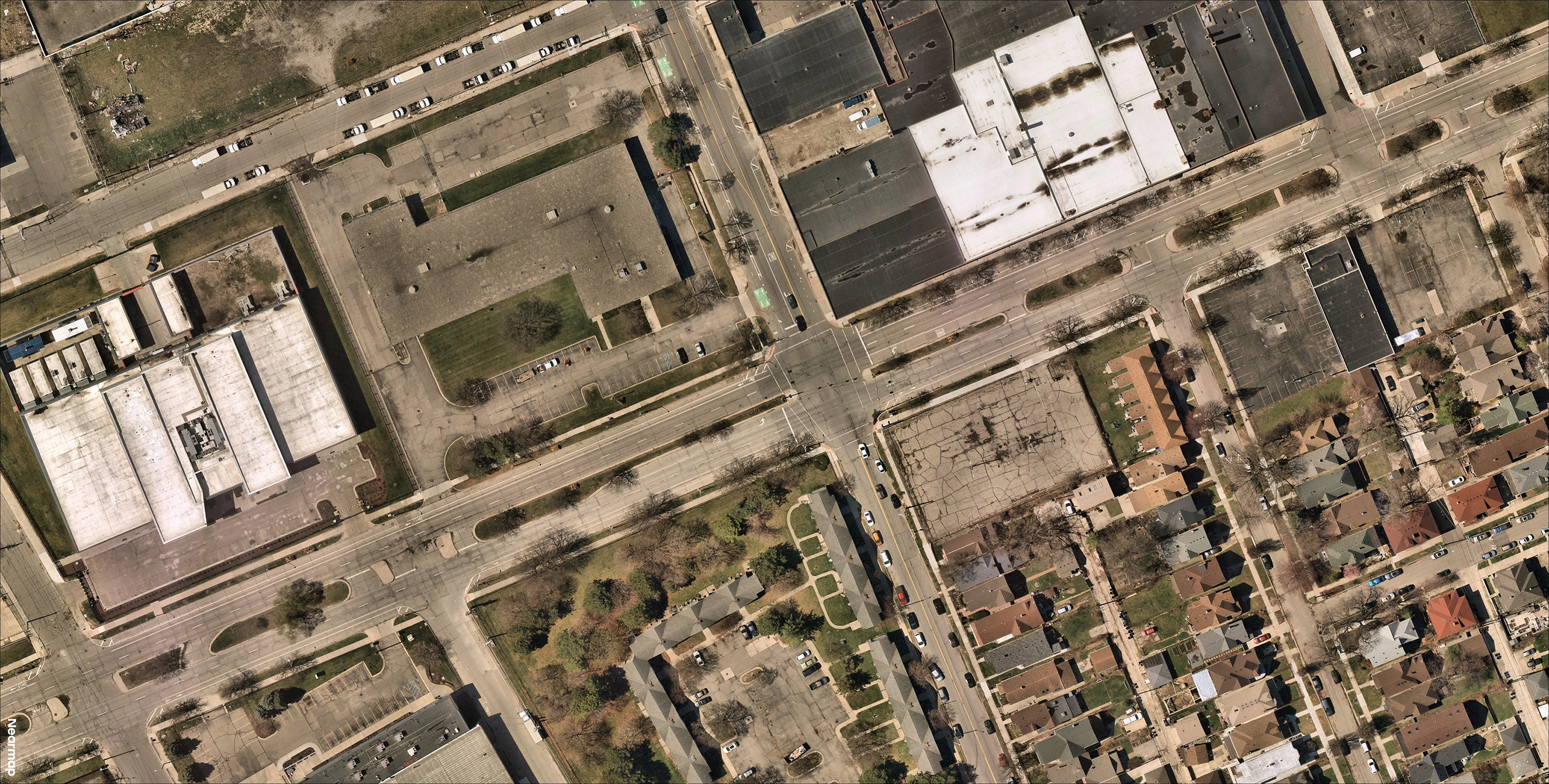
Example MUT in Birmingham, MI
Source: Nearmap
What is a Median U-Turn Crossing?
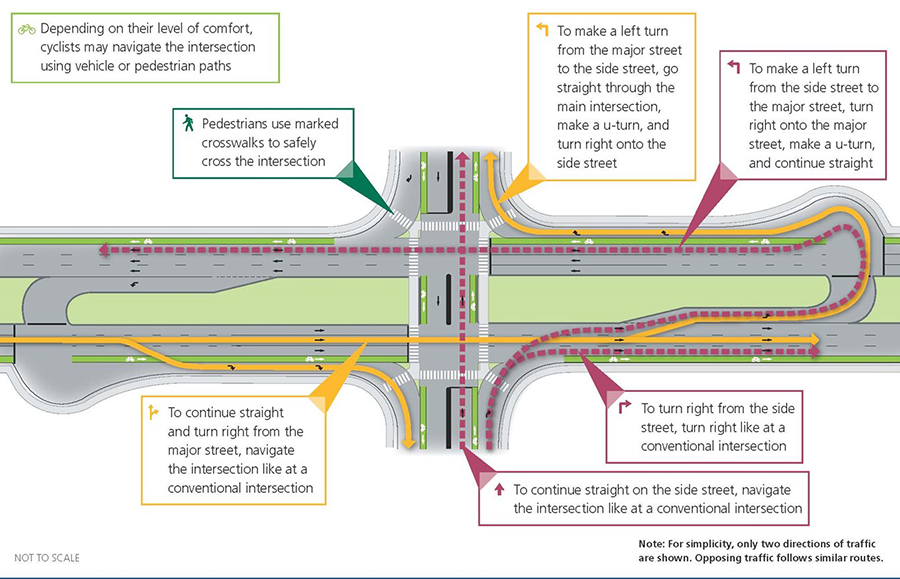
A Median U-turn (MUT) Intersection—also known as a Median U-Turn Crossover, Michigan Left, or Thru-Turn Intersection—is an innovative intersection that redirects left turns at the main intersection to a downstream U-turn movement in the median. This intersection reduces conflict points which reduces the potential for high-severity conflict types.
Design principles
The following design principles characterize MUTs:

Left turns
Left turns are prohibited from either or both major and minor roads at the main intersection.

Right turns
Through movements and right turns are allowed from both the major and minor roads.
MUTs can be designed in two ways:
- Partial - Only left-turn vehicles from the major street make U-turns at median openings.
- Full - A median U-turn is used for both the major and cross street. Multimodal transportation is accommodated with pedestrian and bicycle crossings located at the main intersection.
Design characteristics
Median U-turn Intersections are characterized as follows:
- Left turns are removed from the main intersection; drivers complete left-turning movements using a right-turn and U-turn sequence.
- Fewer signal phases are required, allowing for less delay.
- Reduces vehicle-vehicle conflict points compared to conventional intersections.
- Typically applied on divided highways or multilane arterials with high through volumes.
- The U-turn spacing depends on speed, traffic volumes, and geometric constraints.
- Median width must accommodate design vehicles; loons or truck aprons may be required for large vehicles.
- The U-turn may be signalized or unsignalized based on demand and safety considerations.
- Access management, driveway spacing, and corridor coordination are key considerations in MUT corridor planning.
When to consider a MUT
MUTs are most appropriate under the following conditions:
- High through-traffic volumes on the major roadway.
- Moderate left-turn volumes that can be accommodated via indirect movements.
- Wide medians or available right-of-way to support safe U-turn geometry.
Benefits of MUTs
- Reduces the number of high-severity crash conflict points by removing left turns and through movements across opposing traffic.
- Proven reductions in right-angle and head-on crashes compared with traditional intersections.
- In a study of eight MUT locations in Michigan, researchers found an average 30% reduction in injury crash frequency. (Source: Taylor Et. Al)
- Simplifies signal operations by eliminating left turn phases, reducing overall intersection delay.
- Improves mainline progression and travel time along corridors with closely spaced intersections, reducing congestion.
- Studies show a 20-50% improvement in intersection throughput when implementing MUT intersections. (Savage Et .Al Journal of Traffic Engineering, 44(11)
MUT limitations
- May not perform well under high left-turn volumes or excessive congestion at U-turn locations – spill back into main lanes.
- Requires adequate median width or additional design elements (i.e., loons or aprons) for large vehicles.
- Access to adjacent properties may be restricted or redirected, requiring strategic corridor planning.
- Driver unfamiliarity can lead to confusion without proper signing and education.