Diverging Diamond Interchange (DDI)
Innovative Intersections
What is a DDI?
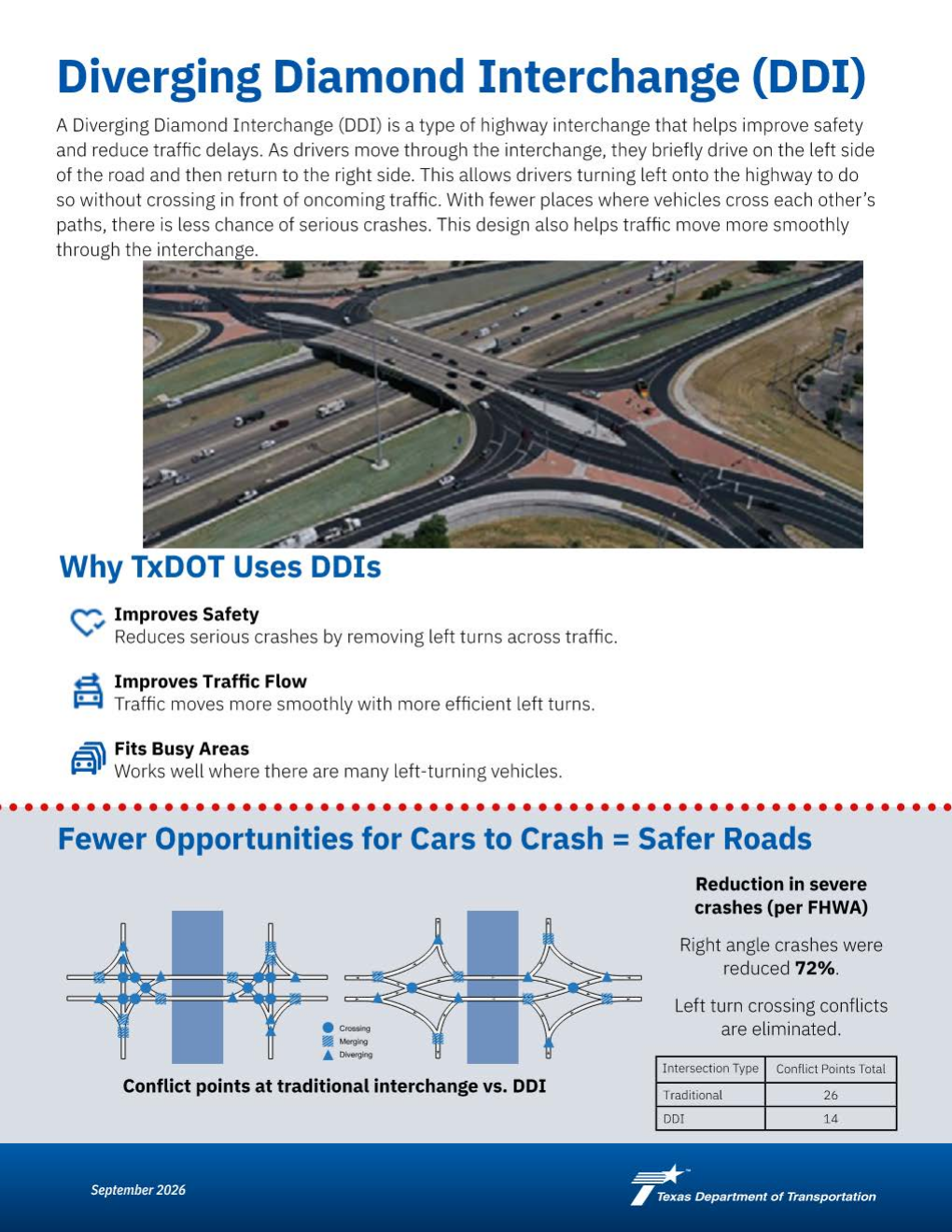
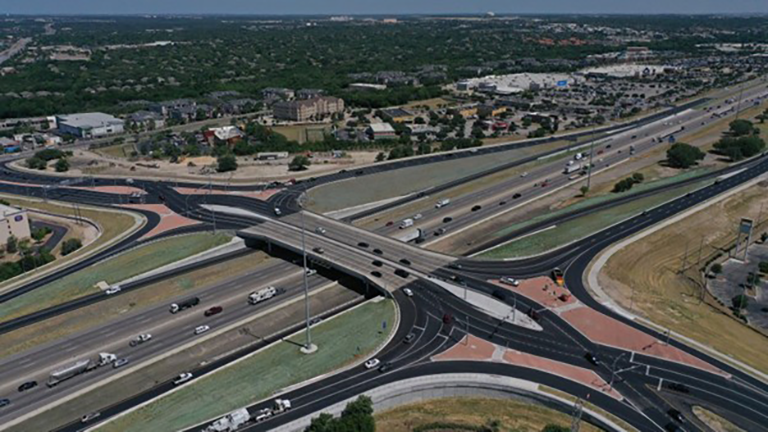
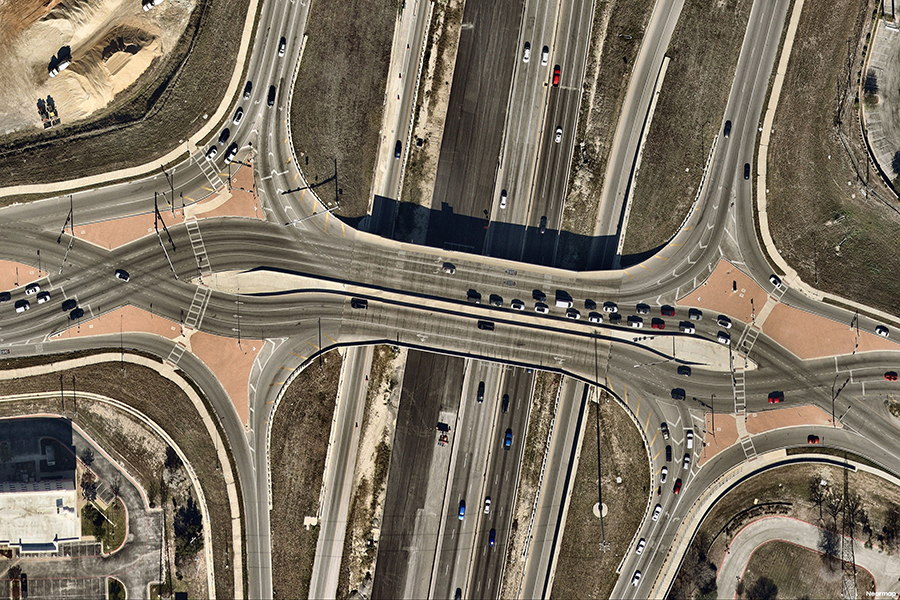
A Diverging Diamond Interchange (DDI) is a grade-separated, signalized interchange design that shifts cross street traffic to the opposite side of the roadway through a series of crossovers. This design eliminates left‑turn conflicts with opposing traffic, reduces the number of vehicle conflict points, and improves overall interchange safety and operational efficiency.
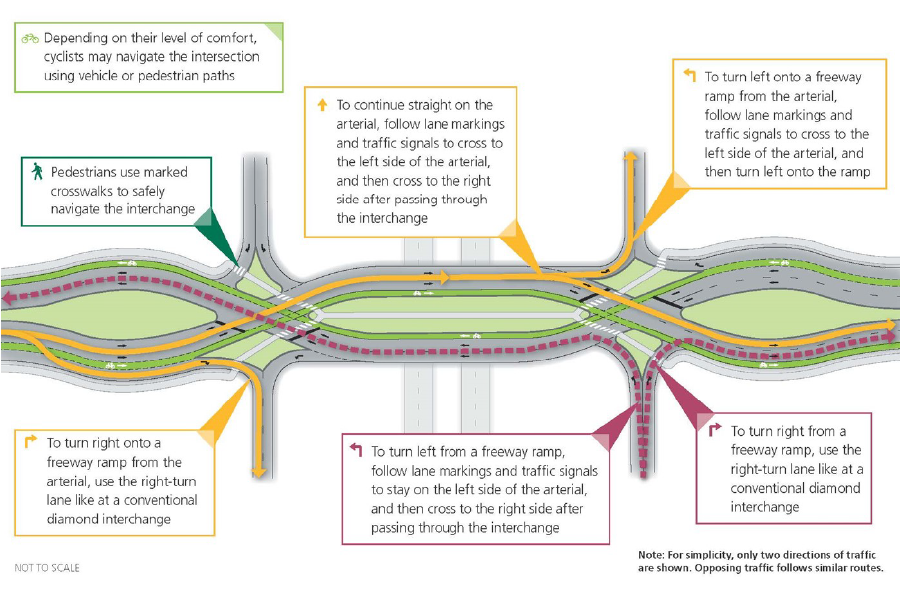
TXDOT RDM Figure 14-38: Diverging Diamond Interchange Concept (DDI)
Source: Virginia DOT, used by permission
Design principles
DDIs are characterized by the following design principles:

Crossovers
Traffic on the cross street briefly crosses to the opposite side of the roadway

Signalized
Two-phase traffic signals control each crossover

Reduced Speeds
Geometric curvature encourages slower, consistent vehicle speeds through the interchange
Design characteristics
Common to all DDIs
Left-turns from the cross street do not conflict with opposing traffic between the limits of the crossovers
DDIs are grade separated from an access-controlled roadway
Through movements on frontage roads are not accommodated without additional grade-separated bypasses
Site dependent
May be provided for frontage road traffic to avoid signalized intersections
Can be designed as an overpass or underpass, depending on constraints
Pedestrian and bicycle facilities can be incorporated based on local context and needs
When to consider a DDI
- High left‑turn volumes where conventional signal phasing contributes to delay or safety concerns
- Conventional diamond interchanges operating at or near capacity
- Locations with a documented crash history
- Sites where the existing bridge can be reused to limit cost and construction impacts
DDI limitations
- Locations where frontage road through movements are a priority, as additional treatment may be required
- More constrained sites where fitting crossover geometry may influence layout or adjacent development
- At cross streets where pre-existing adjacent driveway access may be restricted or prohibited
- Driver confusion may occur as drivers are placed on the “wrong” side of the road between the crossovers
Benefits of DDIs
- Reduces the number of potential vehicle conflict points by shifting traffic and simplifying signal phasing
- Eliminates left-turn crashes and significantly reduces right-angle and rear-end crashes compared to conventional diamond interchanges
- Studies have shown up to a 46% reduction in total crashes (Source: Missouri DOT)
- Through and left-turning vehicles can move simultaneously, reducing congestion
- Accommodates higher left-turn volumes without adding lanes
- Found to be 50% less expensive to build than conventional interchanges because of the reduced interchange footprint and bridge width. (Source: Transportation Policy Research Center)
- Pedestrians and bicyclists cross fewer lanes, fewer conflict points, and have more crossing time per signal phase
- Central pathways provide refuge and protection, improving overall comfort and safety