Single-Point Urban Interchange (SPUI)
Innovative Intersections
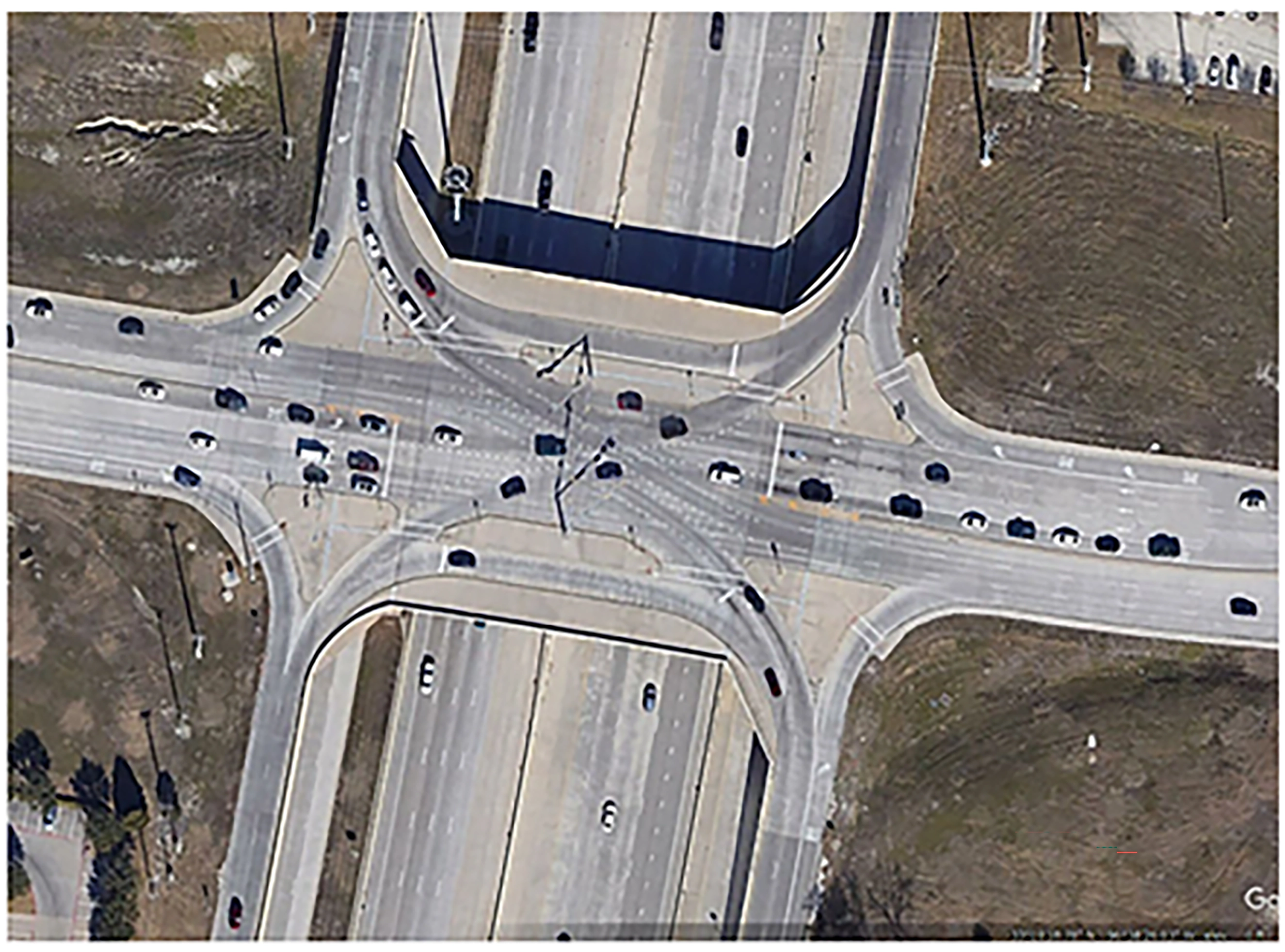
Example SPUI in McKinney, TX
What is a SPUI?

A Single-Point Urban Interchange (SPUI) is a type of innovative intersection designed to move large volumes of traffic safely and efficiently.
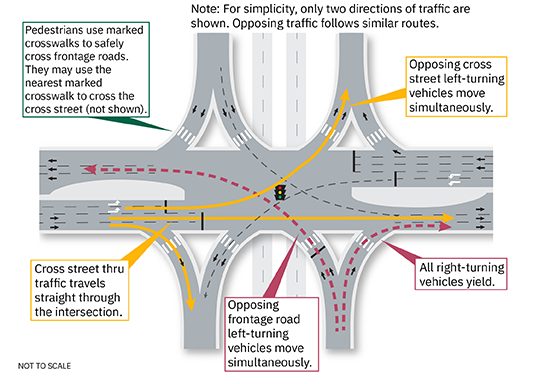
Unlike traditional interchanges, a SPUI uses a single traffic signal to control all movements through the intersection. This design allows opposing left-turn movements to happen simultaneously without directly crossing paths of travel. This helps traffic flow more smoothly and reduces delays.
Because left-turn traffic often creates congestion at busy intersections, SPUIs are especially helpful where heavy left-turn volumes occur. They can also work well along corridors with closely spaced intersections.
Design principles
A SPUI has several features that help move traffic safely and efficiently.

Single traffic signal
All traffic movements pass through one centrally located signal. This simplifies signal timing and helps keep traffic moving.

Overpass or underpass
The main roadway passes over or under the cross street, eliminating at-grade conflict points and improving flow.

Left-turn lanes
Dedicated left-turn lanes allow drivers traveling in opposite directions to make left turns at the same time without crossing each other's paths. This reduces delays and improves safety.

Ramps
Entrance and exit ramps connect directly to the intersection and provide efficient access to and from the highway.

Signal phasing
Because a single signal controls all movements, traffic can be managed more efficiently. This reduces congestion and minimizes delays and wait times.
Why the design works
By reducing conflict points and allowing key traffic movements, especially left turns, to happen
simultaneously, a SPUI can handle high traffic volumes while improving safety and reducing delays.
Design characteristics
Common to all SPUIs
Simultaneous left turns.
Clear separation between main roadway and cross street.
- Enables opposing left-turns to proceed simultaneously without crossing paths.
- Continuous right-turn lanes.
Site dependent
Can be designed as an overpass or underpass, depending on constraints.
Based on the roadway, available right-of-way, and other site constraints.
Depends on current and projected traffic volumes.
Depends on traffic volumes, operational needs, and expected turning movements.
Customized based on traffic patterns, pedestrian and cyclist activity, and nearby intersections.
- Emphasis on pedestrian safety in places with heavy foot-traffic or near schools, etc.
- Determined by specific location, users, connections to nearby destinations, and community needs.
Dependent on specific location, users, and community needs.
Limitations of SPUIs
- Locations where frontage road through movements are a priority, as additional treatment may be required.
- Where the SPUI is the overpass, it may require a larger bridge structure than a traditional interchange.
Benefits of SPUIs
Enhanced safety
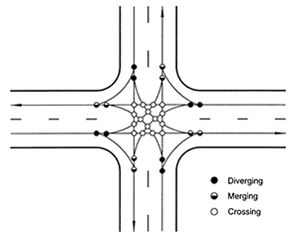
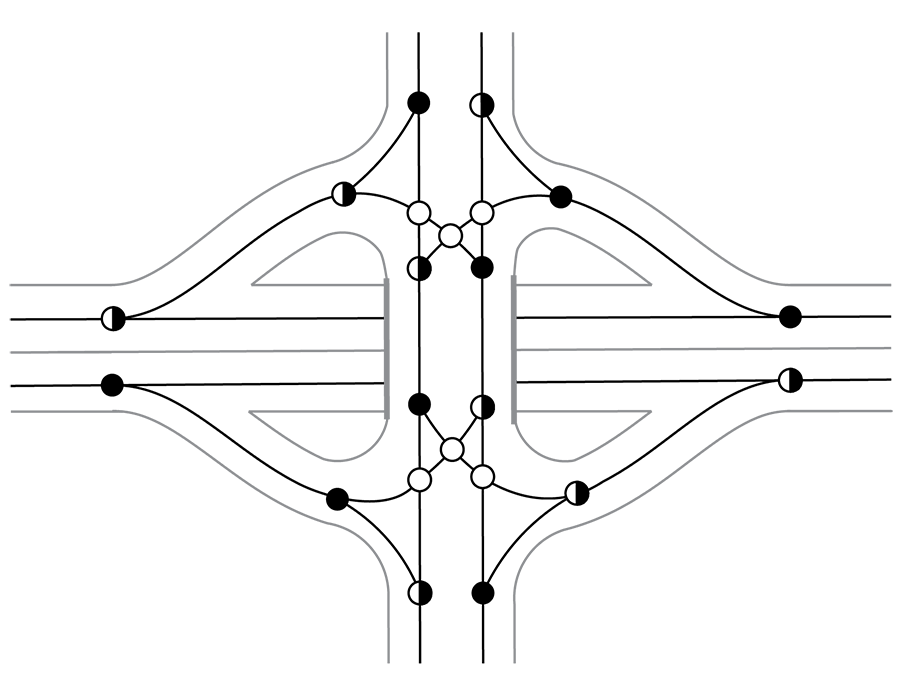
SPUIs reduce the number of conflict points where vehicles cross paths. This design can help reduce the chance of crashes and improve traffic operations.
- Fewer conflict points
- Wider turns for large vehicles
- Safet left-turn movements
Better traffic flow
A SPUI means better traffic flow as it allows more vehicles to move through an intersection, reducing delays and travel times. This means:
- Reduced delays
- Shorter travel and wait times
- More efficient traffic signal operation
- Improved traffic flow during peak travel periods
- Simpler coordination with nearby intersections
Efficient use of space and resiliency
This type of innovative intersection can provide more traffic capacity and often
requires less right-of-way than traditional interchanges. This can make them a
practical solution in some areas, including:·
- Reduced right-of-way needs
- Efficient use of existing highways
- Greater flexibility in tight urban environments