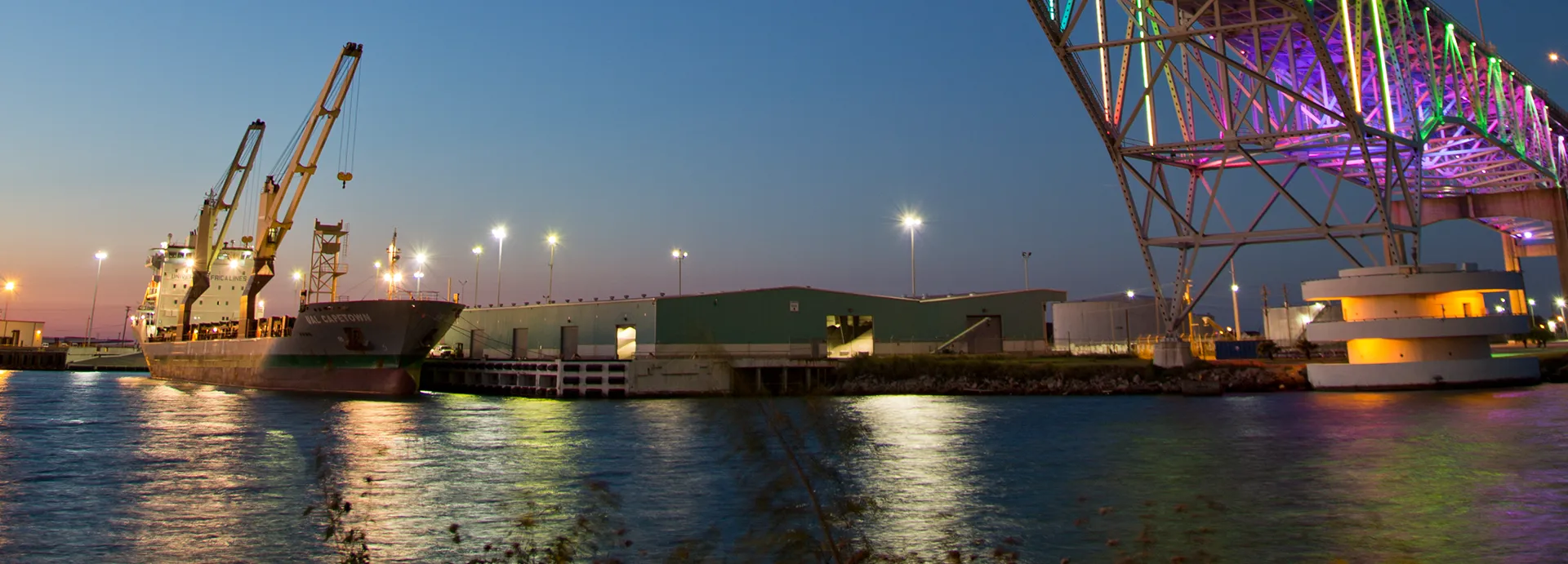
Texas ports are critical to the economic growth of the state and are key components of Texas' transportation system. As hubs of international trade, Texas ports support nearly $782.9 billion in economic activity in the state and account for 27% of the Texas gross domestic product.
According to a 2026 economic impact analysis commissioned by the Texas Department of Transportation, the port industry supports more than 184,000 direct jobs in Texas, generating $15.7 billion in personal income. In total, 2.7 million jobs and $225.3 billion in personal income is generated from economic activity dependent on the state's ports, and the industry contributes $23.3 billion annually in state and local tax revenues.
The Maritime Division promotes the maritime industry in Texas and helps to develop the state's maritime transportation system, including intermodal connectivity of each port to the interstate highway system and freight network.
Together, Texas ports move more cargo than any other state, approximately 765.7 million tons. Texas ports also served 3.6 million cruise passengers in 2025. Six of the state's ports are ranked in the top 20 United States ports by total tonnage: Houston, Corpus Christi, Beaumont, Port Arthur, Freeport and Texas City.
Despite the strong position of the maritime industry in Texas, there is a significant need for additional funding for maritime infrastructure, seaport connectivity, and ship channel improvement projects to sustain the state's competitiveness in domestic and international trade. The biennial Texas Port Mission Plan, developed in collaboration with the Port Authority Advisory Committee, highlights these needs.
TxDOT's port profiles highlight more statistics related to each port's primary commodities, vessel and truck traffic, and port facilities. You can find out more information about each port by visiting their websites below: