Tools and strategies to mitigate end-of-queue crashes
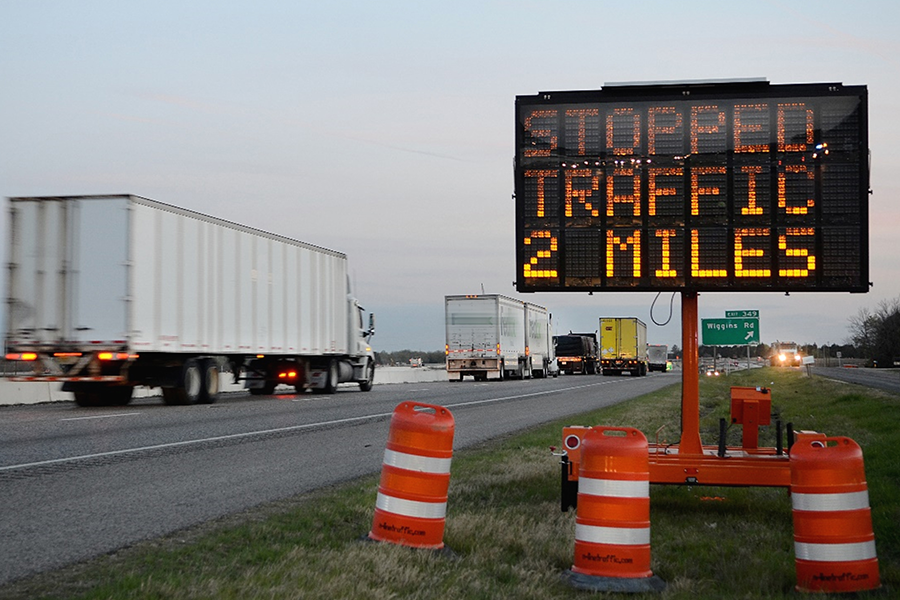
The Waco District implemented an innovative end-of-queue (EOQ) warning system to reduce crashes in work zones along the highly traveled I-35 corridor. Using real-time traffic data and automated messaging, the system detects developing traffic queues and alerts drivers in advance. The approach combines predictive deployment strategies with mobile technology to improve work zone safety during nighttime construction. This innovation enhances driver awareness, reduces crash severity, and provides a scalable model for work zone safety management.
Challenge
Work zones along I-35 frequently create unexpected traffic queues, especially during nighttime lane closures, where drivers often do not anticipate stopped traffic. Unexpectedly slow or stopped traffic can result in a high risk of severe crashes, particularly along a heavy freight corridor. To improve safety and reduce crashes, the Waco District identified a critical need to provide real-time warnings to approaching drivers and enhance work zone management through better data and planning. The urgency was compounded by limited space for permanent warning equipment and a need for mobile, flexible solutions to support temporary, frequently changing construction activities throughout a long corridor.
Solution
The Waco District deployed a mobile, automated end-of-queue warning system that included traffic speed sensors to detect when queues begin to form. When slow speeds indicate a developing queue, the system automatically generates and displays warning messages on portable changeable message signs along the roadway. For maximum effectiveness, a predictive, data-driven deployment strategy was also implemented, taking traffic volumes, location, day of the week, and time into consideration to guide nightly placement of systems along the 100-mile corridor.
Benefits
- Reduces work zone crashes, including severe and fatal incidents
- Provides real-time, accurate warnings to approaching drivers
- Improves driver awareness of unexpected traffic conditions
- Enhances coordination of construction activities and resource allocation
- Demonstrates significant safety improvements through data-driven deployment
Additional key information

- Automated detection of traffic queues using real-time speed sensors and traffic data
- Real-time warning messages delivered via portable changeable message signs
- Mobile deployment designed for dynamic, shifting work zone conditions
- Predictive placement strategy based on traffic patterns, lane closures, and construction schedules

- Developed a data-driven methodology to predict queue formation
- Deployed mobile end-of-queue systems nightly across a 100-mile corridor
- Integrated sensor data with automated messaging systems
- Created reporting tools to support contractor planning and staffing
- Conducted extensive, multi-night deployment and monitoring effort with TxDOT teams and contractors

- First large-scale mobile end-of-queue deployment of its kind, serving as a national model
- Can be expanded to other high-volume corridors and work zones
- Adaptable for various construction scenarios and traffic conditions
Alignment with TxDOT strategic goals





Contact
Do you have questions or need additional information about this innovation project?