Ice mitigation procedures for permeable friction course pavements
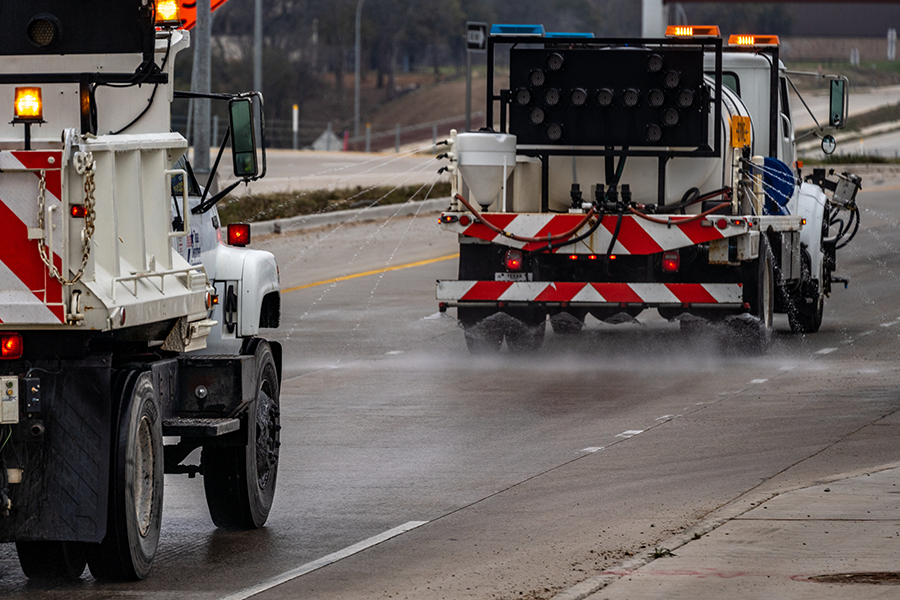
The Paris District developed a data-driven approach to improve ice mitigation on permeable friction course (PFC) pavements. By using road weather information stations (RWIS) and real-time sensor data, the district can better understand how weather conditions affect treatment effectiveness. This approach allows for more precise application of de-icing materials and improved winter roadway safety. The innovation enhances efficiency, reduces waste, and supports better decision-making during winter weather events.
Challenge
The Paris District frequently experiences winter storms that require proactive ice prevention measures, particularly on PFC pavements, where effective winter pretreatment strategies are especially challenging. These pavements are designed to allow water to drain through surface voids, but those same voids can cause de-icing materials to seep into the pavement, reducing their effectiveness and making it harder to optimize material use, reduce waste, and control costs. Newer PFC surfaces often require more treatment than traditional pavements, making it difficult to determine the appropriate application rates, support real-time operational decisions, and enhance roadway safety during winter weather conditions.
Solution
The district implemented a system of mini road weather information stations (RWIS) to collect real-time data on weather and pavement conditions. This data is used to develop and refine treatment guidelines for permeable friction course pavements before, during, and after winter weather events. By analyzing correlations between environmental conditions and treatment performance, the district can adjust application strategies to improve effectiveness and efficiency.
Benefits
- Improves effectiveness of ice prevention treatments
- Reduces material waste by optimizing application rates
- Enhances roadway safety during winter weather events
- Supports more informed and timely decision-making
- Increases efficiency of winter maintenance operations
Additional key information

- Mini road weather information stations (RWIS) that monitor pavement and environmental conditions
- Real-time alerts for changing weather and roadway conditions
- Data-driven adjustment of pretreatment strategies
- Monitoring of pavement friction and surface status

- Installed multiple mini road weather information stations along key corridors
- Collected and analyzed data during winter weather events
- Compared treatment performance across different pavement types and conditions
- Used findings to refine application strategies for future events

- Can be expanded to other districts that experience winter weather challenges
- Adaptable for different pavement types and environmental conditions
- Supports broader implementation of data-driven winter maintenance practices
Alignment with TxDOT strategic goals



Resources
Contact
Do you have questions or need additional information about this innovation project?