Roadside solar powered cameras
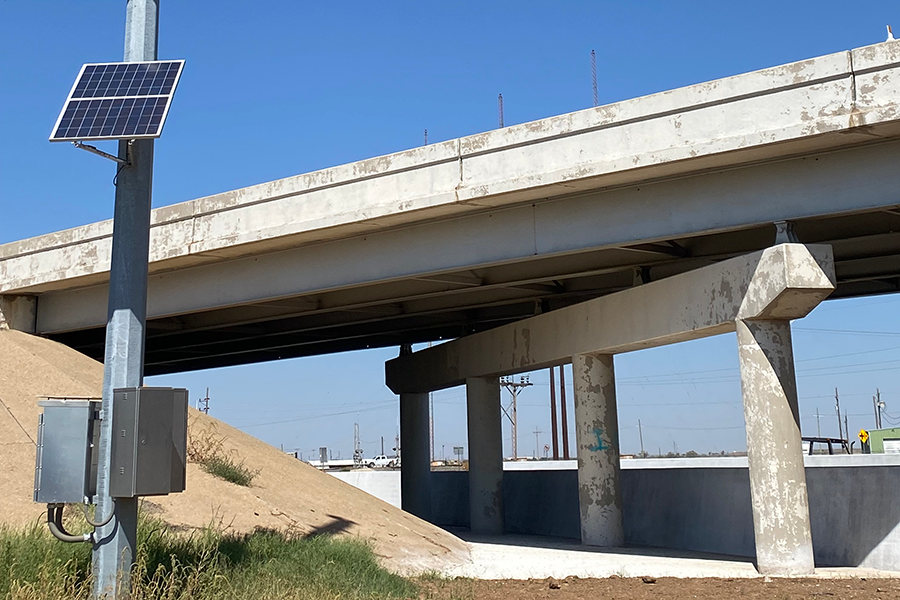
The Lubbock District implemented a solar-powered closed-circuit television system to establish reliable roadway monitoring in an area with inconsistent electrical service. Using solar panels, battery storage, and power conversion equipment, the system provides continuous video monitoring without reliance on the power grid. This approach improves uptime, reduces long-term costs, and enhances safety monitoring capabilities. The innovation is a practical and scalable solution for locations where no reliable power infrastructure exists.
Challenge
The district experienced inconsistent power supply at a critical location, reducing the reliability of CCTV operations and limiting continuous roadway monitoring. These interruptions impacted visibility into roadway conditions and weakened safety oversight. Traditional grid-connected systems were not sufficient to maintain consistent performance, particularly in areas with limited or unstable electrical infrastructure. This lack of dependable power created a need for a more reliable, cost-effective solution that could support monitoring in remote or hard-to-reach locations.
Solution
The district implemented a solar-powered CCTV system designed to operate independently of the electrical grid, improving reliability while reducing dependency on traditional infrastructure. The system uses solar panels and a battery unit to generate and store energy, along with charge controllers and inverters to regulate power for continuous equipment operation. Dual solar systems balance electrical loads and maintain consistent uptime for cameras, communication devices, and network components. This approach expands monitoring capabilities into remote areas while lowering long-term operational costs.
Benefits
- Provides continuous roadway monitoring with high system uptime
- Reduces reliance on external power sources
- Lowers operating costs by eliminating meter charges
- Improves safety through consistent video surveillance
- Enables deployment in remote or infrastructure-limited locations
Additional key information

- Solar-powered CCTV system with battery storage
- Dual-system design for load balancing and redundancy
- Charge controllers and inverters for power regulation and conversion
- Continuous 24/7 video streaming capability

- Installed two solar-powered systems with multiple batteries and panels
- Configured inverters to convert DC power to AC for equipment use
- Distributed electrical load across system components for reliability
- Used commonly available TxDOT materials and equipment
- Used real-time video data from CCTV cameras and system performance data from electrical and monitoring components
- Partnered with internal TxDOT electrical and maintenance teams

- Can be implemented in other locations that lack reliable power
- Adaptable for expanding ITS and monitoring infrastructure
- Supports broader deployment of solar-powered transportation systems
Alignment with TxDOT strategic goals


Contact
Do you have questions or need additional information about this innovation project?