Adaptive signal operations using crowdsourced speed data
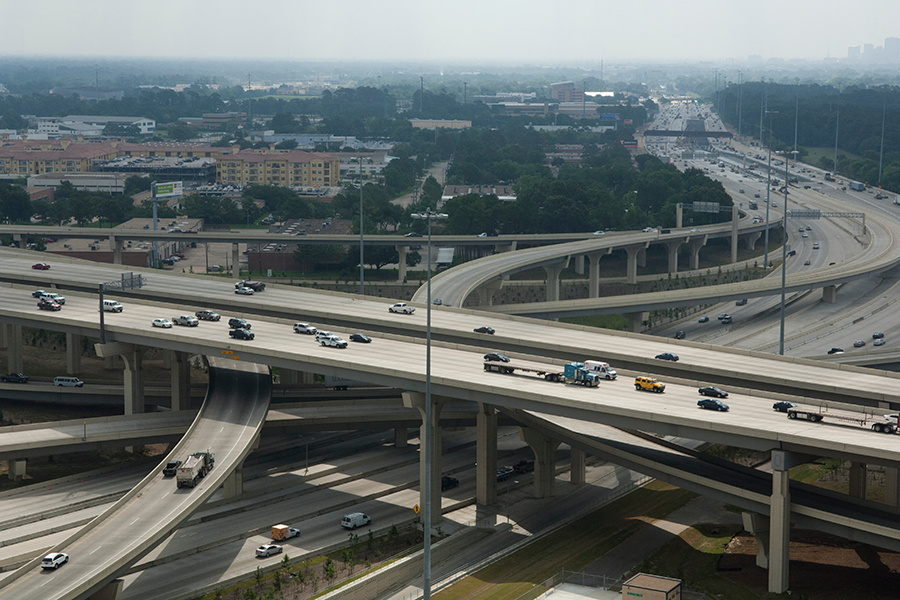
The Houston District implemented an adaptive signal system that uses real-time, crowdsourced speed data to improve traffic flow along freeway frontage roads. By dynamically adjusting signal timing based on changing traffic conditions, the system helps manage congestion caused by incidents, traffic volume, or weather-related disruptions. This approach enhances mobility, reduces delays, and improves overall system performance. The innovation provides a cost-effective, scalable model for improving traffic signal operations.
Challenge
It can be challenging for signalized intersections along freeway frontage roads to quickly accommodate sudden fluctuations in traffic flow, particularly during inclement weather and freeway incidents when vehicles divert to adjacent frontage roads. A limited ability to improve traffic flow during unexpected congestion, reduce delays and travel times, or effectively use real-time data to adjust signal timing prompted the district to look for a cost-effective solution that could operate within existing infrastructure while responding dynamically to changing traffic conditions in real time.
Solution
The district implemented a system that uses crowdsourced speed data to dynamically adjust traffic signal timing patterns along frontage roads. A web-based tool was developed to monitor traffic conditions in real time and support system management. The approach builds on a previously piloted system, enhanced through integration of external data sources. Automation allows signals to respond dynamically to changing traffic conditions without manual intervention.
Benefits
- Reduces congestion and delays by increasing frontage road green-light time
- Improves traffic flow during incidents and peak demand periods
- Saves fuel by reducing stop-and-go traffic
- Cloud-based data analysis allows dynamic adjustment to changing conditions
- Enhances overall transportation system efficiency
Additional key information

- Real-time adaptive traffic signal timing
- Integration of multiple data sources, including cloud-based speed data and radar-based inputs
- Web-based monitoring tool for real-time system oversight and management developed by Texas A&M Transportation Institute
- Automated adjustments based on current traffic conditions

- Selected pilot locations based on performance and safety
- Developed and deployed monitoring and control tools
- Integrated system into shared traffic management center operations
- Expanded and refined capabilities from an initial pilot project

- Expandable to additional frontage roads and high-traffic corridors
- Adaptable for use in other urban and metro areas
- Supports broader implementation of data-driven traffic management systems
Alignment with TxDOT strategic goals



Resources
Contact
Do you have questions or need additional information about this innovation project?