Bye-bye blueprints, hello high-tech highways
April 23, 2026
By Ryan LaFontaine
AUSTIN — TxDOT is accelerating a major shift in how it designs and delivers road projects, rolling out new digital tools that promise greater accuracy, efficiency and safety across the state’s transportation system.
At the center of that shift is a move away from traditional 2D paper plans toward fully digital, 3D design environments — a transformation agency leaders say will change how projects are planned, built and maintained for decades to come.
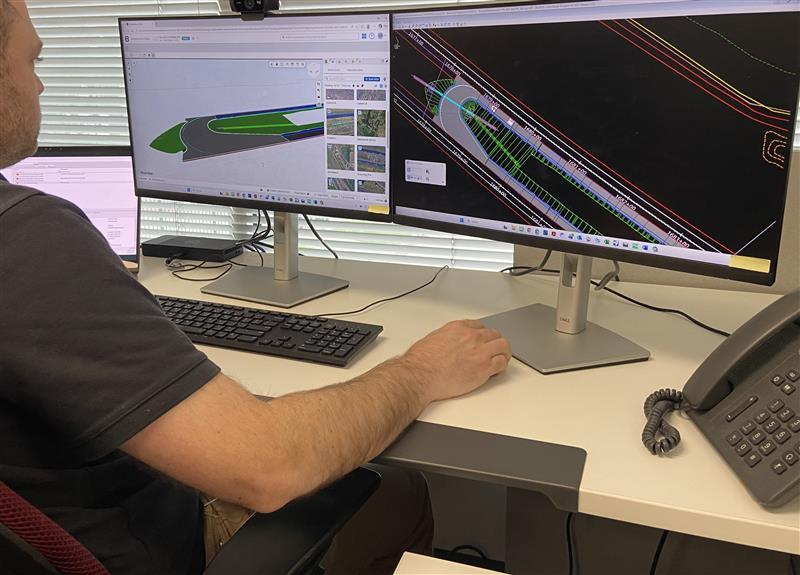
The new approach, known as digital delivery, allows engineers to build detailed 3D models — or “digital twins” — of roads and bridges before construction begins. These models can identify potential problems such as drainage conflicts or utility clashes long before crews arrive on site.
According to Jason Pike, TxDOT director of design, the shift provides a clearer, data-driven view of projects at every stage.
“Instead of relying on stacks of paper plans or disconnected files, contractors and planners can now work from a single, shared model that improves visualization, strengthens coordination and reduces costly surprises in the field,” Pike said.
The result: fewer change orders, more streamlined construction and better communication with the public.
TxDOT is currently piloting digital delivery projects across the state, with plans to evaluate lessons learned from each project to ensure continuous improvement and thoughtful expansion. By the end of 2027, the goal is for all 25 TxDOT districts to have awarded at least one project using the new delivery method. The long-term goal is to make digital delivery the default approach for future projects.
The digital push is also closely tied to TxDOT’s growing use of alternative delivery contracting, overseen by the agency’s Alternative Delivery Division.
The integration of digital tools, data-driven decision-making and collaborative delivery models represents a major evolution for the agency — one aimed at keeping pace with Texas’ rapid growth.
As the pilot program expands, TxDOT officials expect the benefits to compound: faster project delivery, fewer delays and ultimately a safer, more resilient transportation network for millions of Texans.