US 83 Texas Corridor Study
Study overview
TxDOT’s Transportation Planning and Programming Division is conducting the US 83 Texas Corridor Study. The US 83 Texas Corridor Study will establish a long-range implementation plan to guide improvements along the corridor. This major north-south corridor plays a vital role in connecting rural communities, regional hubs, and metropolitan areas. As a key freight and intermodal route, it supports the movement of goods and people across the state.
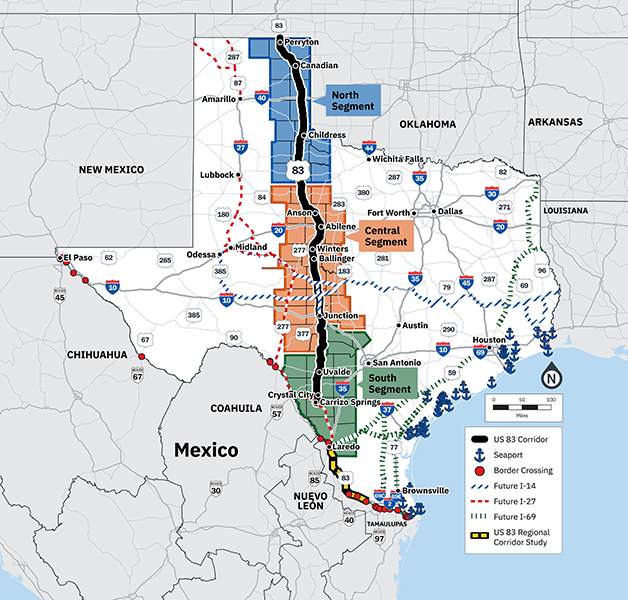
The US 83 study spans from US 83 from Carrizo Springs to the Texas/Oklahoma state line for approximately 606 miles. US 83 travels through 6 TxDOT Districts, 22 counties, 9 Metropolitan Planning Organizations/Council of Governments, and 23 cities. This study will build upon the work done and improvements identified in the US 83 Regional Corridor Study, completed in 2023, and the I-27 System in Texas Implementation Plan which is on-going.
US 83 Texas Corridor Study area map
Key considerations
Potential improvements to the US 83 Corridor will be identified in collaboration with the stakeholders and public by analyzing multiple elements, such as:
- Safety and operations
- Freight movement
- Emerging technology
- Asset condition and performance
- International trade
- Connectivity and mobility
- Economic vitality and resilience
- Multimodal access and connectivity
- Environmental and community context
Study approach
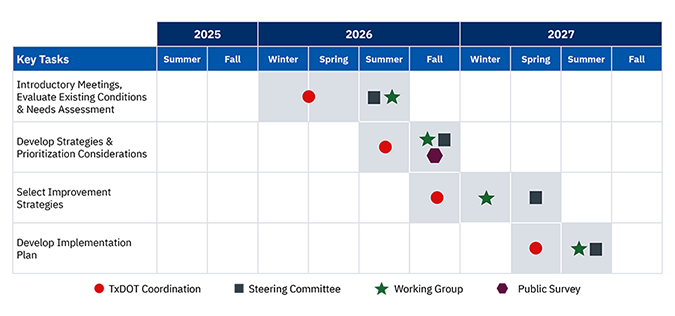
TxDOT will review existing conditions, perform economic analysis, and engage a broad range of corridor stakeholders to identify needs and gaps. The study will be conducted in phases with four rounds of stakeholder engagement meetings from Winter 2026 to Summer 2027.
These phases will evaluate existing conditions and needs, develop strategies and prioritize considerations, select improvement strategies, and develop an implementation plan.
Stakeholder and public engagement
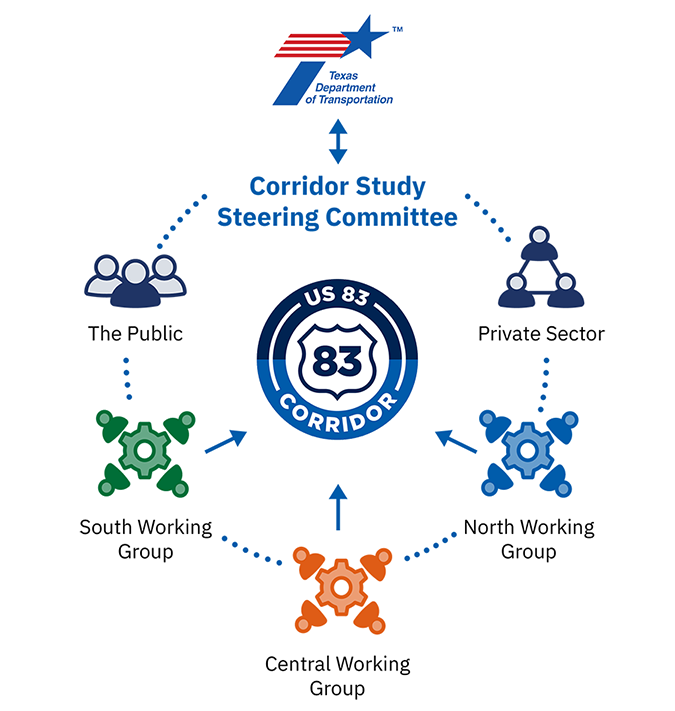
This study will be guided through a corridor-wide Steering Committee with input from three Segment Working Groups, TxDOT Districts and Divisions, the Public, and Private Sectors.
Key stakeholders include:
- TxDOT district and division representatives
- A steering committee
- The three Working Groups
- South – From US 277 in Carrizo Springs to the Kerr/Kimble County line
- Central – From the Kerr/Kimble County line to the Stonewall/King County line
- North – From the Stonewall/King County line to the Texas/Oklahoma state line
- Local elected officials
- Industry groups – economic development organizations, agriculture sector, energy sector, trucking
- Advocacy groups
- Members of the public
The public will have the opportunity to provide input through a survey conducted during the development of the study.
| Title |
| Fact sheet |