Helping protect Galveston’s ghost wolves
April 2, 2026
By Bailey Doucet
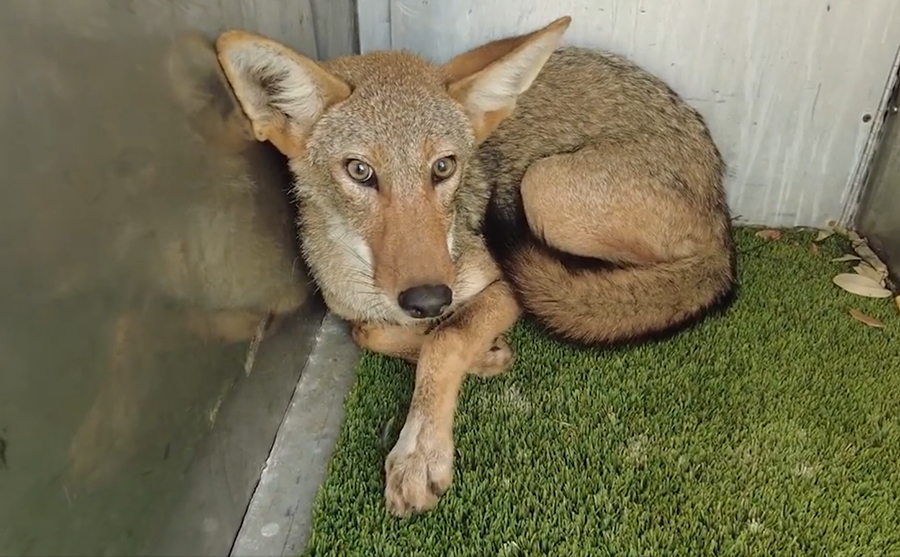
GALVESTON, Texas — On a quiet stretch of FM 3005, something rare crosses the road — a coyote with the genetic legacy of a vanished species. They’re called “ghost wolves” — elusive, rare and hiding in plain sight on Galveston Island.
Local wildlife experts, in partnership with TxDOT, have installed wildlife crossing signs along FM 3005 to help raise awareness and reduce vehicle collisions with wildlife in the area.
Ghost wolves are coyotes that harbor DNA from the critically endangered red wolf that used to thrive in southeast Texas until the late 1900s. As the red wolf populations declined, they crossbred with coyotes. As a result, DNA remnants from the red wolf can be found in the genetic code of this isolated, island coyote population.
The effort to add wildlife crossing signs began in 2024, when a few researchers from the Gulf Coast Canine Project got in touch with TxDOT and voiced their concerns about the “ghost wolf” mortality rate along FM 3005.
To understand the issue, TxDOT Environmental Project Planner Brooke Bowman, went to the third annual Ghost Wolves Town Hall in January 2025. At this event, researchers and members of the community discussed the importance of ghost wolves and how to protect them as development on Galveston Island increases.
Bowman and her team worked with Galveston County officials to collect and analyze coyote mortality data along FM 3005 from 2020-2025.
The team was able to identify locations to install the signs where mortality rates were the highest.
They chose ten locations across a 19-mile stretch of FM 3005 to place the wildlife crossing signs, half on the westbound side and half on the eastbound side. . This helps ensure drivers coming from both directions are aware that wildlife is more likely to cross in these areas.
Installation was completed last month.
This project represents a collaborative relationship between TxDOT, wildlife researchers, and local agencies to improve safety for drivers and animals.
In addition to Galveston Island’s ghost wolves, the signs are expected to benefit many other species that inhabit the island. By alerting drivers to possible wildlife crossings, the signage also helps decrease the risk of wildlife-vehicle collisions that can endanger motorists.