A slice of Texas on every interstate in America
Sept. 2, 2026
By Ryan LaFontaine
AUSTIN — Seventy years after the nation launched its interstate highway system, one of its most recognizable symbols can be traced back to a Texas Highway Department engineer with an assignment to come up with a better road sign.
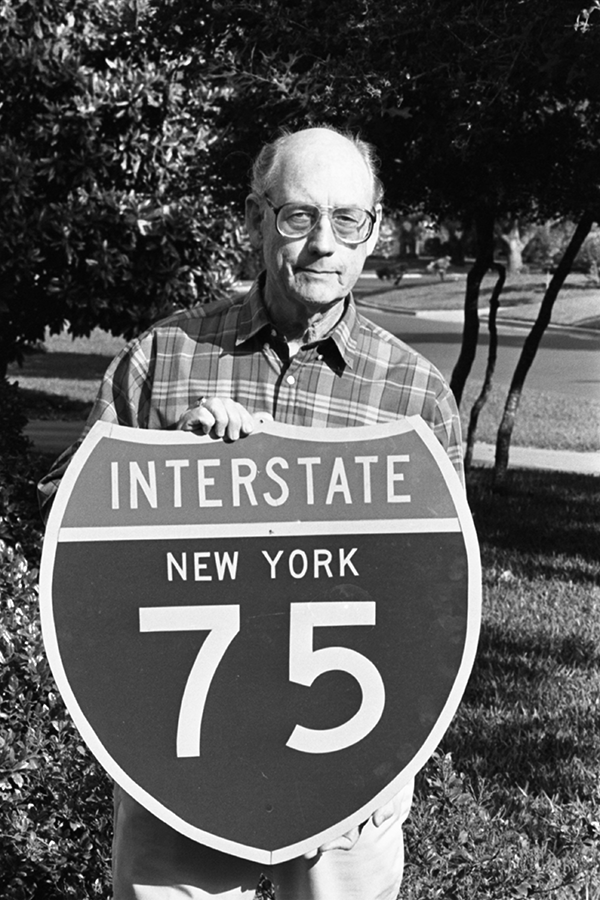
In 1956, Richard Oliver, then a senior traffic engineer with the Texas Highway Department, was tasked with developing the state’s entry for a national contest to design the route signs for the new Interstate Highway System.
Oliver’s challenge was to create a sign that was practical to manufacture while also conveying the significance of a new, federally designated network of highways that would connect communities and commerce across the country.
“I wanted to use red, white and blue,” Oliver told Transportation News in a 1992 interview about his design. “I presume that the Bureau of Public Roads—that’s what the FHWA was called back then—also felt that the shield should be red, white and blue.”
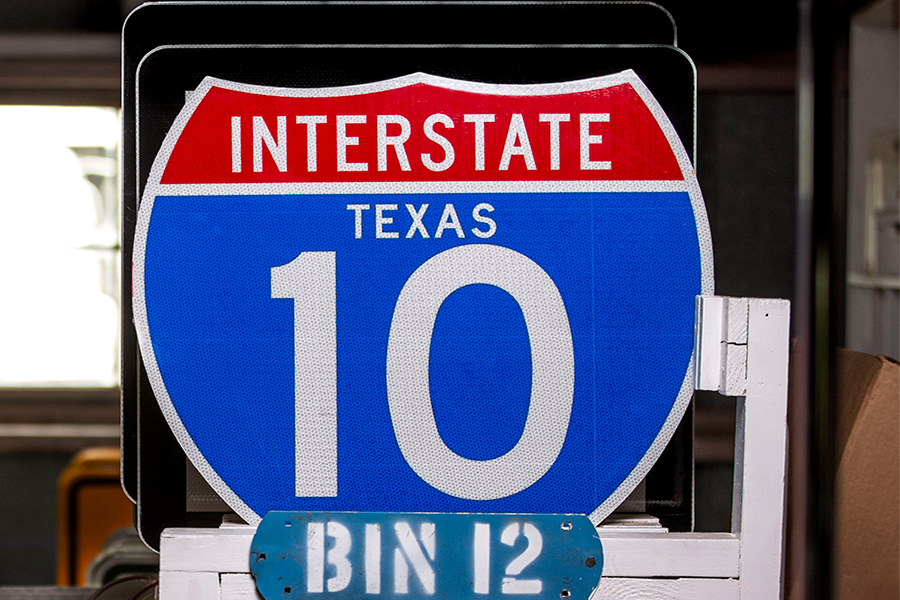
Oliver wasn’t initially sure the design would pass muster with the federal Bureau of Public Roads, which oversaw standards for the emerging interstate system. But Texas’ design ultimately was recommended by the American Association of State Highway Officials — and went on to become the iconic symbol used to identify interstate highways across the nation.
In September 1957, Dewitt C. Greer, head of the Texas Highway Department at the time, wrote to Oliver, congratulating him on his winning design.
“I just wanted you to know that we are all proud that Texas won this honor and particular that your suggestion was the one adopted,” Greer wrote. “Please accept our commendations for your ingenuity and skill in proposing this marker.”
Seven decades after Oliver put his red, white and blue design on paper, the symbol he helped create remains familiar to virtually every American driver.
“When we drive on an interstate highway, we are traveling on one of the greatest civic investments in American history,” TxDOT Executive Director Marc Williams said in remarks commemorating the 70th anniversary of the interstate highway system. “Our responsibility now is to protect and invest in that legacy, modernize it, and prepare it for future generations.”
Oliver’s contribution came at the beginning of what would become a remarkable transformation for Texas.
In 1962, during Oliver’s time with the agency, Texas opened its first interstate segment along I-35 in downtown Austin. At the time, Texas had fewer than 10 million residents and an economy largely built around oil, gas, agriculture, manufacturing and regional trade.
Texas now has more than three times the population it had then, and its economy is among the most diverse in the world. The state’s interstate system has grown alongside it, becoming a backbone for the movement of people, goods and services.
Oliver’s interstate sign serves as a reminder that the Texas transportation legacy is built not only on miles of pavement, but on the people whose ideas helped shape the system.
Today, however, it seems very few TxDOT employees are familiar with the history of the signs they install and maintain every day. When he first learned about Oliver's creation, Dallas transportation maintenance tech William Davis said, "I had no idea. He’s from our TxDOT? That's awesome."