
36A North
Environmental process
The 36A North Project will follow the National Environmental Policy Act (NEPA) process. TxDOT works with the Federal Highway Administration (FHWA) and other federal agencies to comply with NEPA and the FHWA’s responsibilities assigned to TxDOT through the Memorandum of Understanding (MOU) dated Dec. 9, 2019. TxDOT will partner with resource agencies, stakeholders, and the public throughout the life of the 36A North Project.
NEPA process
The NEPA process is a set of procedures and activities to gather information on and analyze and document the potential environmental effects of a proposed project. . TxDOT has developed the Environmental Toolkits for use in the preparation of environmental studies. A description of resources considered by this project can be found in the 36A North Environmental Studies pages on this website.

The 36A North Project must comply with NEPA before a final decision can be made about actions that could have environmental and community effects. A range of public involvement activities under NEPA provides an opportunity for you to be involved in the TxDOT decision-making process. The goals of these activities are to help you understand what TxDOT is proposing, to solicit your thoughts on alternative ways for TxDOT to accomplish what it is proposing, and to provide opportunities to offer your comments on TxDOT’s analysis of the environmental effects of the proposed action and possible mitigation of potential harmful effects of such actions. NEPA requires that TxDOT considers environmental effects that include, among others, impacts on social, cultural and economic resources, as well as natural resources. Local residents and frequent visitors (i.e., travelers) often have useful information about places and resources that they value and the potential environmental, social and economic effects that proposed federal actions may have on those places and resources. NEPA’s requirements provide you the means to work with TxDOT so that we can take your information into account.
Each year, a large number of environmental review documents, including Environmental Impact Statements (EISs), are prepared by TxDOT. These documents provide residents, facility users and communities an opportunity to learn about and be involved in each of those environmental impact assessments that are part of the TxDOT decision-making process. It is important to understand that commenting on a proposal is not a “vote” on whether the proposed action should take place. Nonetheless, the information you provide during the EIS process can influence the project. Under NEPA, your comments regarding potential consequences of an action prior to issuance of a final decision are taken into consideration.
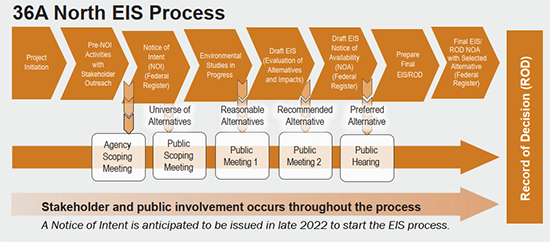
The EIS process begins with the publication of a Notice of Intent (NOI) in the Federal Register, stating TxDOT’s intent to prepare an EIS for the proposed action. The NOI provides a brief description of the proposed action and possible alternatives. It also describes TxDOT’s proposed scoping process, including any meetings and how the public can get involved. The NOI will also contain a TxDOT point of contact who can answer questions about the proposed action and the NEPA process. The scoping process is the best time to identify issues, determine points of contact, establish project schedules and provide recommendations to the agency. The overall goal is to define the scope of issues to be addressed in depth in the analyses that will be included in the EIS.
Public Participation
Scoping is an early and open process "As part of the process, TxDOT is required to identify and invite the participation of interested persons. It is in the public's best interest to become involved as soon as the EIS process begins and to use the scoping opportunity to make thoughtful, rational presentations on impacts and alternatives. Some of the most constructive and beneficial interaction between the public and an agency occurs when citizens identify or develop reasonable alternatives that the agency can evaluate in the EIS.
As part of the process, TxDOT is required to identify and invite the participation of interested persons. TxDOT will evaluate and implement the best communications methods for effective involvement of communities, whether local or regional, that are interested in the proposed action. Video conferencing, public meetings, conference calls, formal hearings or informal workshops are among the legitimate ways to conduct scoping. It is in your interest to become involved as soon as the EIS process begins and to use the scoping opportunity to make thoughtful comments on impacts and alternatives that may be of use to project developers. Some of the most constructive and beneficial interaction between the public and an agency occurs when residents or interested parties identify or develop reasonable alternatives that the agency can evaluate in the EIS.
The next major step in the EIS process that provides an opportunity for your input is when TxDOT submits a draft EIS for public comment. The Environmental Protection Agency (EPA) publishes a Notice of Availability in the Federal Register informing you and other members of the public that the draft is available for comment. The draft EIS process includes the environmental analysis and preparation of technical reports for all of the various disciplines to discuss the impacts that could result from the proposed project. These technical reports inform the draft EIS and allow for a more informed decision.
Based on the communication plan established by the agency, websites, local papers or other means of public notice may also be used. A comment period will be defined at this time. During this time, TxDOT will conduct public hearings to solicit comments. TxDOT will also request comments from other Federal, State, Tribal and local agencies that may have jurisdiction or interest in the matter.
When the public comment period for the draft EIS is complete, TxDOT analyzes comments, conducts further analysis as necessary and prepares the final EIS. In the final EIS, TxDOT must respond to the substantive comments from other government agencies and from you and other members of the public.
The Record of Decision (ROD) is the final step for agencies in the EIS process and may be combined with the final EIS. The ROD is a document that states what the decision is; identifies the alternatives considered, including the environmentally preferred alternative; and discusses mitigation plans, including any enforcement and monitoring commitments.