Section 3: Railroad Equipment Limitations
General Railroad Equipment Limitations
Several factors may impact the reliability of information from the railroad signal system due to limitations inherent in railroad warning systems. The termination shunts are placed a set distance from the grade crossing based on the train’s maximum approach speed and the requested total approach time. Long approaches add complexity to the railroad warning system especially when approaches overlap with adjacent crossings. Additionally, when an environmental factor is introduced that causes varying train speeds, a consistent warning time becomes more difficult to replicate. Various factors include, but are not limited to:
- Multiple tracks at the grade crossing,
- Accelerating or decelerating trains,
- Train stations near the crossing, and
- Train yards and switching trains near the grade crossing.
AREMA 50 Second Rule
Advance preemption holds several benefits over simultaneous preemption, one of which is how advance preemption can provide a lower activation time for the railroad warning system at locations where a large APT is expected to adequately clear the crossing of any vehicles. As a result, advance preemption has garnered popularity over simultaneous preemption. However, this has led to highway authorities requesting increasingly higher preemption times, resulting in increased delays for motorists queued upstream of a grade crossing during preemption events. Long activation times can be linked to a lack of compliance with the warning system and can lead to undesirable motorist behavior.
Prior to 2018, as highway authorities requested longer preemption times at interconnected grade crossings, railroad warning times also began to fluctuate. This led to some concern regarding the reliability of railroad warning time. Grade crossing warning equipment manufacturers reported that as approach times increases, the railroad equipment’s ability to accurately detect a train’s approach became less reliable.
As a result, AREMA adopted the 50 second rule to encourage industry best practice to avoid unnecessarily increasing vehicular delays and provide reliable preemption timing at interconnected grade crossings.
Per the AREMA C&S Manual in Part 3.1.10, Section C, “For grade crossing warning systems, interconnected with highway traffic signals, System Design Time minus Equipment Response Time shall not exceed 50 seconds.”
In this case, the term “System Design Time” may be used interchangeably with “Total Approach Time”. Railroad authorities utilize various types of signal equipment, which can lead to varying ERT. The designer shall verify the railroad specific ERT and BT to confirm that the requested TAT will not exceed the AREMA 50 Second Rule. Long railroad approaches create complexities in the railroad warning system and can impact the reliability of warning times. See Figure 4-1 for a graphical representation of how System Design Time relates to the overall railroad approach.
Methods to Reduce Total Approach Time
When the initially calculated TAT exceeds the AREMA 50 second rule, various strategies may be employed to help reduce it.
Preemption Timing Strategies
Long right-of-way transfer times can be attributed to pedestrian clearance times, minimum green times, yellow intervals, red clearance intervals, and/or unusual roadway approach geometries.
One method of reducing the TAT is to fully (or partially) truncate the pedestrian phase when a preemption call is received. Where there are long crosswalks (without refuge areas) existing at the signalized intersection, pedestrian clearance times can increase the TAT by increasing the amount of time that must be provided prior to the Preemption Clearance Interval. Omitting the pedestrian clearance interval expedites the transition to the Preemption Clearance Interval as the train approaches the grade crossing. The designer shall follow the guidance in Form 2304-I to determine if full or partial truncation of the pedestrian clearance interval is reasonable. Where full pedestrian clearance is desired during preemption and results in a TAT that exceeds the AREMA 50 Second Rule, the designer should discuss the need for Advance Pedestrian Preemption Time (APPT) with the railroad. The total APPT should be determined by subtracting the APT without full pedestrian clearance from the APT with full pedestrian clearance.
APPT=APT (with pedestrian clearance)-APT (without pedestrian clearance)
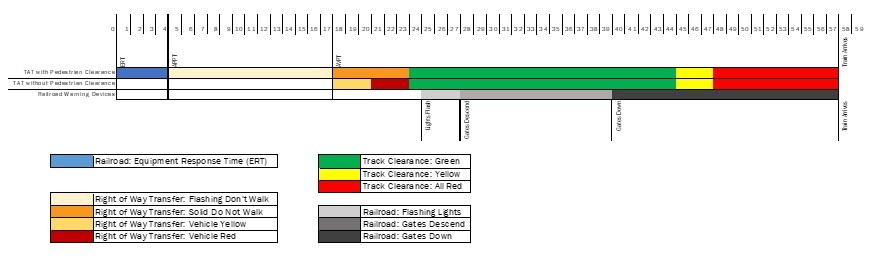
Figure 4–5. Traffic Signal Operations with APPT
Another method to reduce TAT is to reduce the minimum green time (Line 16 on
), which is defined as the minimum number of seconds that an active phase will display a green indication prior to transitioning to yellow and red clearance. Reducing the minimum green time decreases the right-of-way transfer time allowing the Preemption Clearance Interval to start sooner. This disadvantage of reducing minimum green is it may not meet driver expectations. Minimum green may be reduced to zero seconds unless the diagnostic team determines otherwise.
Minimum separation time (Line 43 on Form 2304) may also be reduced to meet the AREMA 50 Second Rule. Form 2304-I defines minimum separation time as a time “buffer” between the departure of the last vehicle from the railroad crossing and the arrival of the train. A minimum of four (4) seconds should be provided.
Queue Management Strategies
Queue management strategies may be implemented such that the calculated warning time may not need to account for the full queue clearance interval. Pre-signals can be used at locations where there is not enough storage space downstream for a design vehicle to safely queue between the tracks and the intersection. The pre-signal is intended to prevent queues on the grade crossing and stop vehicles from entering the grade crossing area during normal operations and during preemption.
A queue-cutter traffic signal, on the other hand, can be used to control traffic approaching the grade crossing by detecting vehicles downstream of the crossing and turning red before vehicles queue back onto the tracks. Guidance on preemption calculations for pre-signals and queue cutters is found in Chapter 3. Their design is discussed further in Chapter 6.
When calculating the preemption timing, the installation of a pre-signal or queue-cutter traffic signal can result in a shorter queue clearance time. Queue prevention is theoretically provided at all times, so queue clearance time only needs to clear the MTCD. These measures also help to provide more efficient queue management at the grade crossing and can improve overall traffic signal operations and traffic flow during normal operations.
Traffic Signal Operation Strategies
Certain traffic movements could be a leading factor in a TAT exceeding the AREMA 50 Second Rule. When a preemption call is sent to the traffic signal controller, the right-of-way transfer time interval must finish serving the current vehicular phase prior to the Preemption Clearance Interval. Any vehicular phases that cross the path of the track clearance phase may require longer right-of-way transfer time. One example is the left turn movement towards the tracks. For locations in which traffic on the street parallel to the tracks provides a permissive left turn movement but does not have enough storage length upstream of the tracks to allow a design vehicle to safely store, additional time is needed to allow the vehicle to complete the left turn and travel through the grade crossing area prior to crossing activation. Installing protected-only left turn phasing allows the conflicting vehicle to clear the intersection during normal operations and reducing the need to account for it in the preemption calculations during a preemption call.
The designer should make every effort to meet the AREMA 50 Second Rule while providing the time determined in the preemption calculations to effectively clear the tracks prior to arrival of the train. If site geometrics prevent compliance with the AREMA 50 Second Rule the designer shall notify the railroad as soon as possible to request a variance. A variance on the 50 Second Rule can be granted by the operating railroad in some special situations on a case-by-case review.
Multiple Track Crossings
Multiple track crossings have unique operations that can affect the operation of the traffic signal. Multiple tracks mean there is potential for back-to-back trains and preemption events. Depending on when the subsequent train enters the track circuit, the traffic signal may go from one preemption event and to another with little or no green time for the exit phase before returning to track clearance green. Crossings with multiple tracks should be designed to operate with the track clearance interval as the exit phase to minimize confusion to motorists. If a new preemption event occurs during the exit phase, the traffic signal should restart the track clearance interval and remain in track clearance green until the gate down input is received.
Train Stations, Rail Yards and Switching Trains
Where train stations, rail yards and/or train switching occurs in the railroad approaches there is potential for trains to be accelerating, decelerating, or stopping. These operations can cause traffic signals to enter and exit preemption without a train ever reaching the crossing. This can lead to driver confusion and frustration. If possible, railroad approaches for interconnected traffic signals should not extend into sidings or rail yards. TAT should be kept to a minimum at these locations to reduce the potential of having these elements in the approaches. If a switch or station is located inside the railroad approach, the ADV and XR circuits could energize at the same time. Where these elements cannot be avoided, the XR circuit shall be included in the interconnection. When the XR input is received the traffic signal shall immediately transition to track clearance green by serving the yellow and red clearance for any conflicting phases to begin clearing vehicles off the tracks as soon as possible. Queue management techniques should also be evaluated by the diagnostic team to provide queue prevention at all times and reduce the likelihood that vehicles are stopped on the tracks.