Methods to Reduce Total Approach Time
When the initially calculated TAT exceeds the AREMA 50 second rule, various strategies may be employed to help reduce it.
Preemption Timing Strategies
Long right-of-way transfer times can be attributed to pedestrian clearance times, minimum green times, yellow intervals, red clearance intervals, and/or unusual roadway approach geometries.
One method of reducing the TAT is to fully (or partially) truncate the pedestrian phase when a preemption call is received. Where there are long crosswalks (without refuge areas) existing at the signalized intersection, pedestrian clearance times can increase the TAT by increasing the amount of time that must be provided prior to the Preemption Clearance Interval. Omitting the pedestrian clearance interval expedites the transition to the Preemption Clearance Interval as the train approaches the grade crossing. The designer shall follow the guidance in Form 2304-I to determine if full or partial truncation of the pedestrian clearance interval is reasonable. Where full pedestrian clearance is desired during preemption and results in a TAT that exceeds the AREMA 50 Second Rule, the designer should discuss the need for Advance Pedestrian Preemption Time (APPT) with the railroad. The total APPT should be determined by subtracting the APT without full pedestrian clearance from the APT with full pedestrian clearance.
APPT=APT (with pedestrian clearance)-APT (without pedestrian clearance)
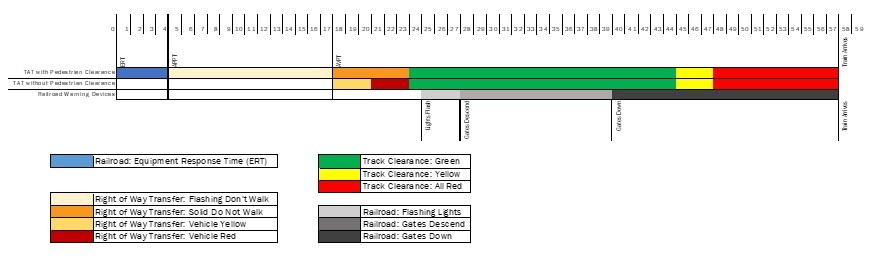
Figure 4–5. Traffic Signal Operations with APPT
Another method to reduce TAT is to reduce the minimum green time (Line 16 on
), which is defined as the minimum number of seconds that an active phase will display a green indication prior to transitioning to yellow and red clearance. Reducing the minimum green time decreases the right-of-way transfer time allowing the Preemption Clearance Interval to start sooner. This disadvantage of reducing minimum green is it may not meet driver expectations. Minimum green may be reduced to zero seconds unless the diagnostic team determines otherwise.
Minimum separation time (Line 43 on Form 2304) may also be reduced to meet the AREMA 50 Second Rule. Form 2304-I defines minimum separation time as a time “buffer” between the departure of the last vehicle from the railroad crossing and the arrival of the train. A minimum of four (4) seconds should be provided.
Queue Management Strategies
Queue management strategies may be implemented such that the calculated warning time may not need to account for the full queue clearance interval. Pre-signals can be used at locations where there is not enough storage space downstream for a design vehicle to safely queue between the tracks and the intersection. The pre-signal is intended to prevent queues on the grade crossing and stop vehicles from entering the grade crossing area during normal operations and during preemption.
A queue-cutter traffic signal, on the other hand, can be used to control traffic approaching the grade crossing by detecting vehicles downstream of the crossing and turning red before vehicles queue back onto the tracks. Guidance on preemption calculations for pre-signals and queue cutters is found in Chapter 3. Their design is discussed further in Chapter 6.
When calculating the preemption timing, the installation of a pre-signal or queue-cutter traffic signal can result in a shorter queue clearance time. Queue prevention is theoretically provided at all times, so queue clearance time only needs to clear the MTCD. These measures also help to provide more efficient queue management at the grade crossing and can improve overall traffic signal operations and traffic flow during normal operations.
Traffic Signal Operation Strategies
Certain traffic movements could be a leading factor in a TAT exceeding the AREMA 50 Second Rule. When a preemption call is sent to the traffic signal controller, the right-of-way transfer time interval must finish serving the current vehicular phase prior to the Preemption Clearance Interval. Any vehicular phases that cross the path of the track clearance phase may require longer right-of-way transfer time. One example is the left turn movement towards the tracks. For locations in which traffic on the street parallel to the tracks provides a permissive left turn movement but does not have enough storage length upstream of the tracks to allow a design vehicle to safely store, additional time is needed to allow the vehicle to complete the left turn and travel through the grade crossing area prior to crossing activation. Installing protected-only left turn phasing allows the conflicting vehicle to clear the intersection during normal operations and reducing the need to account for it in the preemption calculations during a preemption call.
The designer should make every effort to meet the AREMA 50 Second Rule while providing the time determined in the preemption calculations to effectively clear the tracks prior to arrival of the train. If site geometrics prevent compliance with the AREMA 50 Second Rule the designer shall notify the railroad as soon as possible to request a variance. A variance on the 50 Second Rule can be granted by the operating railroad in some special situations on a case-by-case review.