Route Arrangement and Lane Geometry
Figure 5‑8 illustrates the three basic types of route arrangements that can exist at a freeway-to-freeway interchange. These include:
- The freeway continues to the left and traffic exits to the right to a different freeway. This arrangement is most consistent with driver expectancy.
- The freeway continues to the right and traffic exits to the left to a different freeway. This is a left exit condition.
- The freeway ends at another freeway. Traffic exits the ending freeway to travel in either direction on the other freeway.
For each route arrangement, three types of lane geometries are possible. These include:
- The left branch is on a tangent alignment, and the right branch is curved.
- Both the left and right branches are on a curved alignment.
- The right branch is on a tangent alignment, and the left branch is curved.
Figure 5‑8 illustrates nine combinations of route arrangements that are possible when an optional lane serves both the continuing and exiting routes. Similar combinations are possible when no optional lane is present.
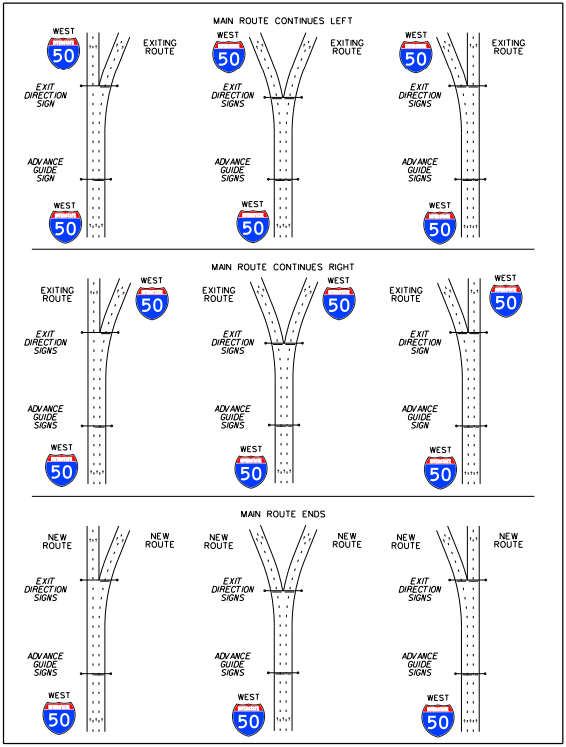
Figure 5-8. Route direction and lane geometry at an interchange.