Section 2: Analysis Methods
Preemption Identification Process
The need to evaluate a location for preemption often begins with one of the following scenarios although other scenarios may present themselves.
- Railroad Investigator identifies a potential need through annual inspections
- A railroad or highway authority identifies a concern through inspection or routine maintenance
- Roadway or railroad improvements impact the operation of a crossing
- Crash Data or near miss reports from rail operator, highway authority, or other witnesses
The TxDOT Rail-Highway Operations Manual requires the District Railroad Coordinator to arrange to have
filled out in preparation for the diagnostic inspection. TMUTCD recommends “If a grade crossing is equipped with flashing-light signals and is located 200 feet or less from an intersection or midblock location controlled by a traffic control signal, a pedestrian hybrid beacon, or an emergency-vehicle hybrid beacon, the intersection should be provided with rail preemption in accordance with Section 4F.19 unless otherwise determined by the Diagnostic Team.” Where a crossing is within 200 feet of an intersection or queuing is otherwise expected near the tracks, the District Railroad Coordinator shall require the requesting agency (RRD, railroad, or highway authority; referred to as the Requestor) to complete the following three steps to determine the need for preemption and TxDOT Form 2304 prior to the diagnostic:
- Step 1: Measure Available Storage Distance
- Step 2: Determine Queue Lengths
- Step 3: Determine the need for preemption
Step 1: Measure Available Storage Distance
At grade crossings, there are typically two types of potential queues, influence zone queues and gate spill back queues as illustrated in Figure 2-1. Both types of queues should be considered when determining the need for preemption.
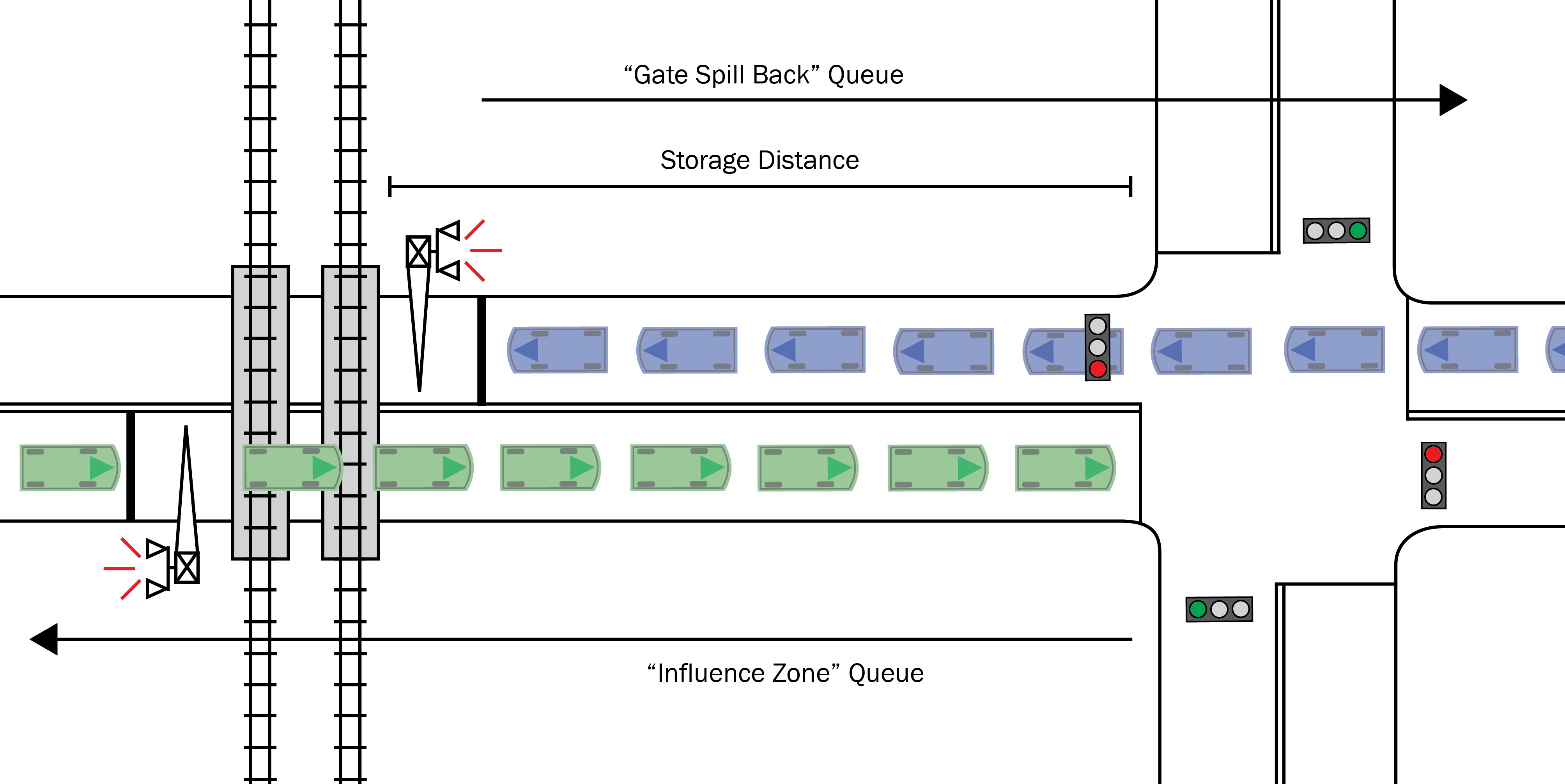
Figure 2–1. Queuing Near Railroad Crossings
The Requestor shall measure the Clear Storage Distance (CSD) as defined in TxDOT Form 2304-I and illustrated above. TXDOT prefers on-site measurements however the distance can be estimated via a desktop survey using reliable aerial imagery or design documents.
Step 2: Determine Queue Lengths
The ITE Preemption of Traffic Signals Near Railroad Crossings manual provides excellent guidance determining the need for preemption. In Texas, the Requestor shall apply at least one of following four methods to determine queue lengths.
- Anecdotal Evidence
- Field Observations
- Queue Length Calculations
- Traffic Simulation Modeling
Anecdotal Evidence
Local highway authority staff, police, train operators, or train dispatchers may note queuing issues and can help initiate further investigation such as timing of field observations. However, the CSD may occasionally be shorter than the length of the design vehicle. In this case, it may not be necessary to further review the queue lengths since vehicles are already likely to queue within the CSD and naturally encroach the tracks when doing so. Various queue mitigation strategies should be implemented to provide the on-track queue prevention.
Field Observations
The Requestor should complete field observations whenever possible to inform the diagnostic team with site specific data. Video surveillance can be used to review a location over an extended period and note motorist behavior and queuing at various times of day.
Queue Length Calculation
Locations where either the intersection, traffic signal, or grade crossing are not yet operational may necessitate queuing calculations to estimate queue lengths. The Requestor should refer to the ITE Preemption of Traffic Signals Near Railroad Grade Crossings manual for additional details regarding queue length calculations.
Traffic Simulation Modeling
When determining queue lengths at locations where the crossing or the intersection is not yet operational, the Requestor may also use traffic simulation modeling. Software running the current version of
Highway Capacity Manual
calculations or a traffic simulation model are acceptable as long as 95th percentile queue length are provided. The Requestor should also consider factors such as vehicle composition, platooning due to nearby signals, potential back-to-back preemption events, train length, and overall time in preemption to accurately estimate queue lengths.Step 3: Determine the Need for Preemption
The Requestor should compare the results of Steps 1 and 2. If the measured distance (Step 1) is less than the queue lengths calculated (Step 2), the diagnostic team should consider preemption.
If a traffic signal is warranted under Warrant 9 in Section 4C.10 of the TMUTCD or any other warrant and queueing is anticipated at the crossing and the highway authority elects to install a signal at the intersection, TxDOT Form 2304 shall be completed and provided to the District Railroad Coordinator prior to the diagnostic inspection. TxDOT Form 2304-I provides information to assist with the completion of the TxDOT Form 2304. Chapter 3 of this manual builds on TxDOT Form 2304-I by providing guidance on collecting data and special preemption scenarios affecting preemption calculations. At the diagnostic inspection, the diagnostic team will discuss the safety implications of installing a traffic signal near a crossing and the specific preemption needs as discussed later in this manual.
When gate spillback queuing is observed, it can often be mitigated with strategies such as vehicle detection, phase omissions, and turn restrictions. If the signal operations can be designed such that on-track queuing is prevented at all times during both normal and preemption operations, then there may not be a significant need for railroad interconnection to be implemented. The diagnostic team should evaluate and observe each grade crossing carefully to determine the best solution.