Section 3: Cutover Process Standard Work
Once the controller testing is complete, TxDOT should confirm the cutover date with the railroad. The Cutover Team, as defined in Section 1 of this chapter, should be present for the cutover. The traffic signal cutover process is conducted at the grade crossing to physically install and verify the interconnection between the traffic signal and railroad signal systems. The District Traffic Signal Representative shall complete Form 2625 to verify operations and document completion of the cutover and submit it to
. The Form 2625 used for the cutover should reflect any adjustments made during the controller testing. The railroad may also have their own cutover packet.
Consistency between the technical details specified in the design plans and the construction work should be verified and documented. Members of the Cutover Team should conduct the following tasks prior to the start of the cutover, if possible:
- Hold a safety briefing with the railroad. During this briefing, members of the Cutover Team should review the goal of the cutover meeting as well as the responsibilities of each participant.
- Walk each intersection approach to verify that signs, markings, traffic signals and RR warning equipment are per plan and are functioning/visible as intended.
- Verify the railroad interconnect cable is landed in the traffic signal cabinet as defined in Chapter 5, Section 5.
- Talk to railroad representatives to understand if there are any outstanding issues on their side and confirm the railroad signal interconnect cable is landed in the railroad signal house.
- Photograph and review completed construction per the design plans:
- Advance warning signs and markings
- Stop line and regulatory signs
- Traffic signal indications and locations
- Lighting
- RR flashers and gates
- Pedestrian features and channelization
- Detection features (e.g., queue loops)
Proper traffic control and roadway flagging are necessary to provide adequate safety for the participants and the public. Railroad flagging may also become necessary if planned construction activities have a potential for equipment or workers to foul the tracks. Depending on the size of the roadway, uniformed police officers may be required to safely maintain traffic operations during the cutover process. TxDOT shall provide the signal interconnect cable from the traffic signal cabinet to a pull box near to the railroad signal house. The railroad will typically make the final connection to the junction box and into the railroad relay contacts, often in a demarcation box on the outside of the railroad signal house. The TxDOT District Railroad Coordinator should coordinate with the railroad to ensure that enough conduit is provided to make the final connection prior to the cutover and to verify the need for railroad flagging.
During the cutover, the railroad and TxDOT shall test and record the traffic signal controller’s response to various relay states from the railroad signal house and the signal operations when a preemption event occurs. The testing plan used from the controller testing should be used to record the expected and actual signal controller responses throughout the cutover. Members of the Cutover Team should conduct observations using live-train events if possible. Members of the Cutover Team should check both the transition of the traffic signal into and out of railroad preemption operations.
If the actual controller response does not match the expected response, then any adjustments and troubleshooting should be conducted to ensure all equipment is functioning properly. The Traffic Signal Representative shall also test the battery back-up system to confirm proper functionality.
Members of the Cutover Team should verify the following information/details during the cutover:
- Conductor colors used for each circuit based on the information provided in Chapter 5, Section 5.
- Signal interconnect cable connections with the traffic signal controller, railroad interface, and railroad signal house, as applicable
- Maximum right-of-way transfer time and minimum Preemption Clearance Interval intervals are consistent with design plans
Once the interconnection is verified to operate as designed, the railroad will place interconnected warning labels in the traffic signal cabinet and railroad signal house, such as the label shown in Figure 7-1. The labels should include the following information for any maintenance personnel entering either enclosure in the future:
- 24-hour contact information for both TxDOT and the railroad if any issues arise at the grade crossing
- Type of interconnection to the adjacent grade crossing
- Date of interconnection installation
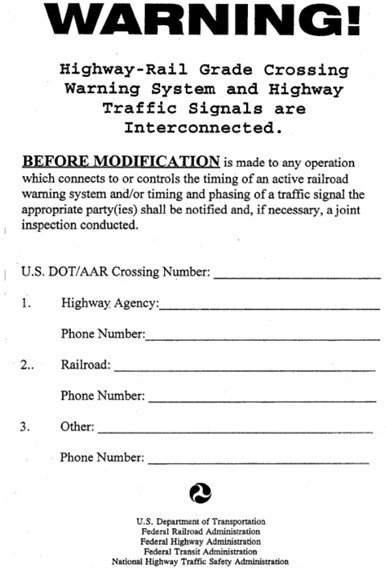
Figure 7–1. FHWA/FRA Interconnected Warning Label
If any traffic signal items of immediate safety concern are noted during the cutover, they should be corrected prior to leaving the site. The purpose of the cutover is to leave the site with the traffic signal and railroad signal systems operating as designed. However, should any issues arise, that cannot be addressed immediately, the Cutover Team shall not leave the site until the team implements a safe, temporary operating condition agreeable to all parties. TxDOT shall refine the traffic signal timing and/or controller programming, if necessary, based on the testing results. Any other identified issues for less critical items may be assigned as action items and prioritized during the post-cutover process.
Upon completion of the cutover the Traffic Signal Representative shall complete Form 2625 and distribute to the Cutover Team. Per the TxDOT Rail-Highway Operations Manual in Chapter 9, Section 2, the District Railroad Coordinator shall draft a Completion Letter to the railroad and update the Texas Railroad Information Management System.