Railroad Warning System
Per AREMA standards, the warning time the railroad provides in advance of the train’s arrival at the crossing is referred to as the Total Approach Time (TAT). TAT is comprised of several values as shown in Figure 4-1. Several of these values (Required Minimum Time, Clearance Time, Minimum Warning Time, and Advance Preemption Time) are included in Chapter 3 of this manual and are also defined in
. Key components that are not needed for preemption calculations but are necessary for determining TAT include the following as defined by AREMA.
- Buffer Time (BT) is the discretionary time that may be added by the railroad to account for variations in train handling.
- Equipment Response Time (ERT) is added to provide for variation in railroad equipment response time.
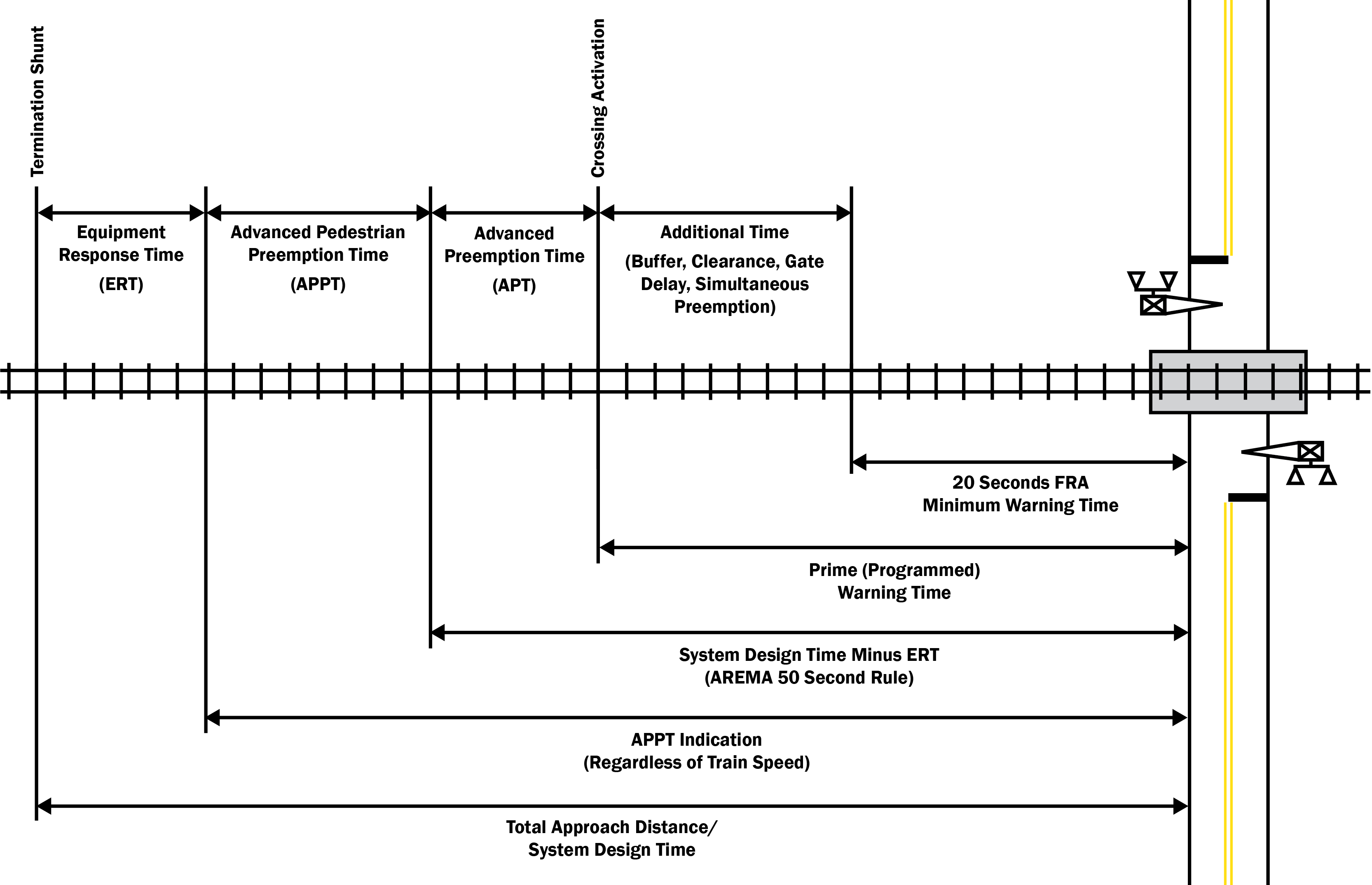
Figure 4–1. Typical Railroad Approach Timing Parameters
Railroads may use various types of detection systems to activate the railroad warning devices. Railroad detection systems generally consist of track circuits and island circuits. Track circuits are terminated by shunts on the tracks which are placed based on the required TAT as shown in Figure 4-1. Crossings with long railroad approaches and/or locations where multiple active warning crossings are in close proximity often use remote signal houses or DAX (Downstream Adjacent Crossing) locations.
Constant warning circuitry is used to provide more uniform warning times. Constant warning circuitry can detect the speed of an oncoming train to activate the railroad warning devices at the appropriate time. Constant warning circuitry also will deenergize the traffic control relay to communicate to the traffic signal controller to begin preemption. A major advantage of constant warning time is it predicts when to drop a preemption call if a train stops on the approach, as the case may be when a station or switch is located between the termination shunt and the grade crossing. Constant warning time may not be suitable for approaches where shunting is erratic due to rust or foreign material on the tracks. Future phases of positive train control (PTC) may add another potential detection type to railroad systems.