Strip Mowing
Mowing the area 14 to 15 feet from the edge of the shoulder (whether paved or unpaved) is called strip mowing. In addition to the strip along the shoulder, all strip mowing operations will include:
- mowing from the pavement edge or shoulder to the right-of-way line to developed areas (cemeteries, schools, churches, private dwellings, community centers, etc.)
- all mowing necessary to maintain adequate sight distances for intersections, private entrances, curves, off-ramps, on-ramps, signs, delineators and other appurtenances
- mowing around all appurtenances (signs, delineators, guardrail, culvert headwalls, etc.) that are within the designated strip width
- mowing the entire width of narrow medians of 15 feet or less and outer separations
- mowing full-width,a maximum of 30 foot width, from right of way to right of way for drainage where appropriate
- mowing a smooth and gradual transition that will blend the designated strip width with other areas that require a greater or lesser mowing width.
(Special situations, such as rural medians, intersections and transitions, are further explained in the following two sections.)
Figures 2-2 to 2-6 show examples of typical strip mowing operations.
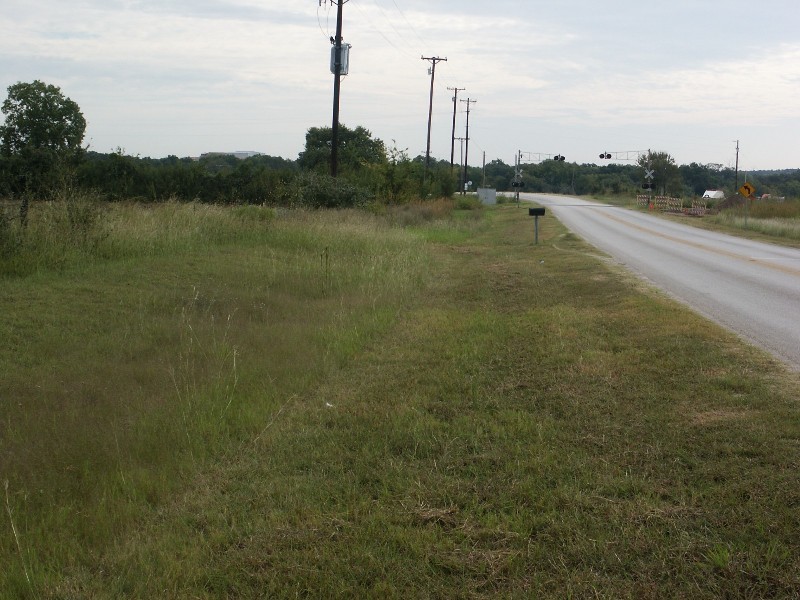
Figure 2-2. Strip Mowing in Austin District.
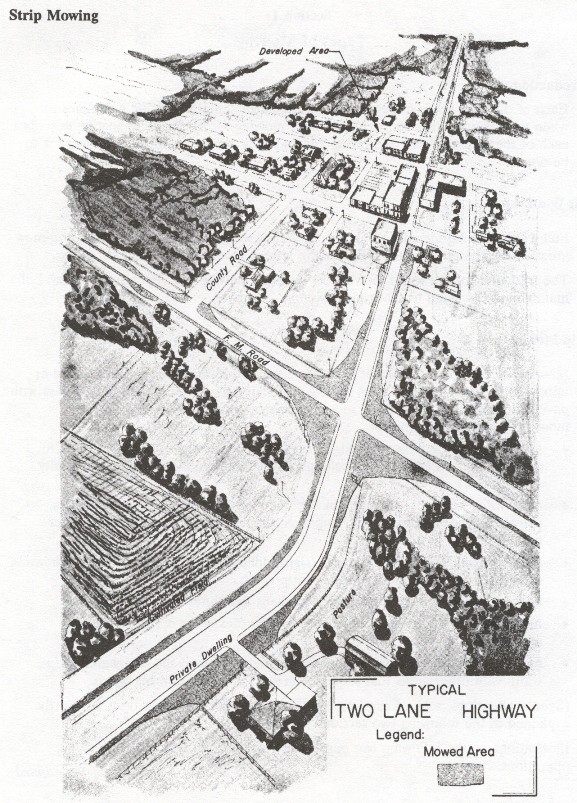
Figure 2-3. Strip Mowing.
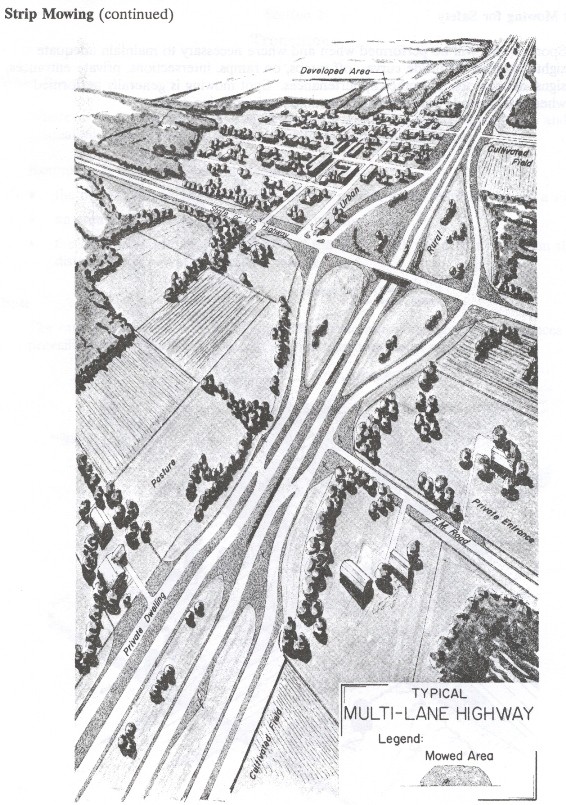
Figure 2-4. Strip Mowing.
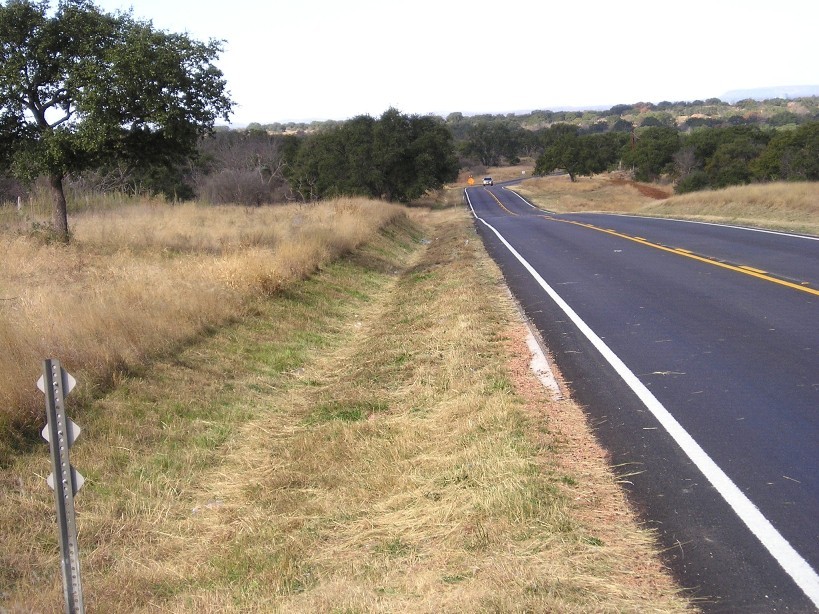
Figure 2-5. Strip Mowing in Llano County.
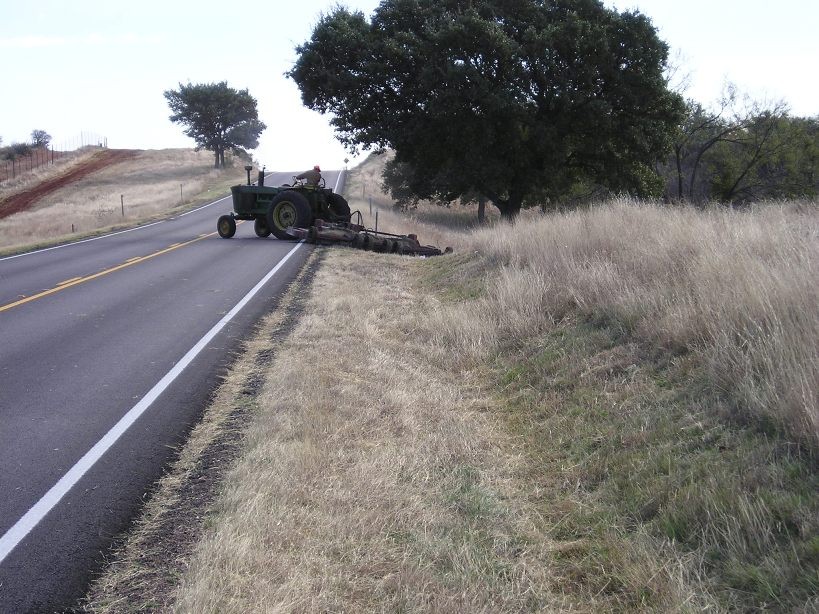
Figure 2-6. Strip mowing in Llano County.